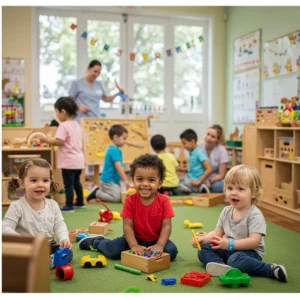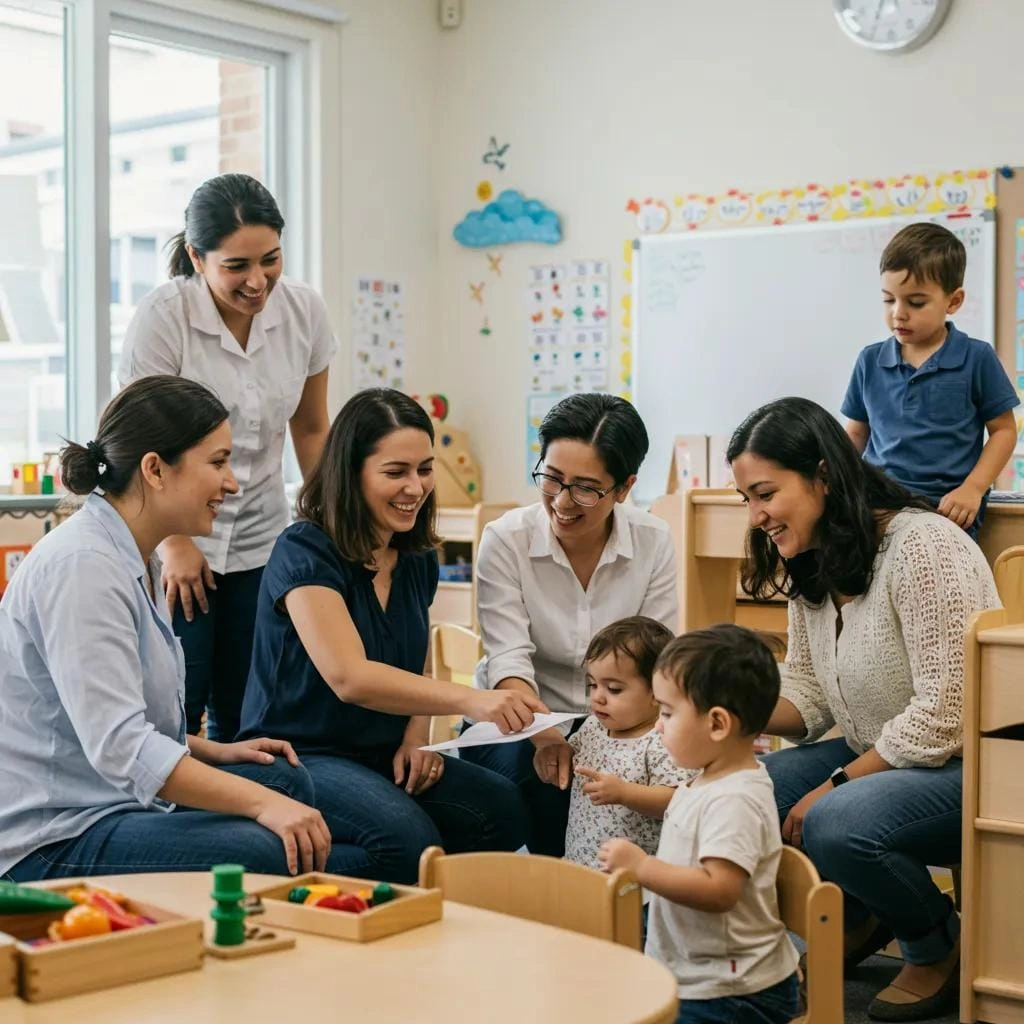
Family engagement in early childhood education is the intentional partnership between families and educators that supports a child’s learning, well-being, and developmental milestones through shared goals, consistent communication, and coordinated activities. This article explains how collaboration with parents and families strengthens learning outcomes, reduces barriers to school readiness, and builds the home–school partnership that children need to thrive. Many families and programs struggle to translate good intentions into reliable routines, targeted support, and meaningful two-way communication; this guide offers practical strategies, evidence-based reasons, and concrete examples to bridge that gap. Readers will learn what family engagement is and why it matters, how families and educators can build effective communication, which strategies foster sustained participation, how Chroma Early Learning Academy operationalizes collaborative childcare programs, and practical steps families can use at home. The guidance below integrates research-informed mechanisms—how family involvement affects language, social-emotional growth, and readiness—with actionable lists, EAV tables mapping practices to outcomes, and clear enrollment and engagement pathways that show how collaborative work produces measurable child development gains. Throughout, this article emphasizes collaboration with parents and families, family engagement early childhood, and parent involvement preschool benefits so caregivers and educators leave with usable routines and tools.
What Is Family Engagement in Early Childhood and Why Does It Matter?
Family engagement in early childhood is a sustained partnership where caregivers and educators share responsibility for a child’s learning and development, exchanging information and aligning strategies to support milestones. This mechanism works because coordinated input—consistent routines, shared expectations, and reciprocal communication—creates converging learning signals that accelerate cognitive, language, and social-emotional development. The primary benefit is improved learning continuity: when families reinforce classroom goals at home, children experience more practice, predictable interactions, and faster skill consolidation. Recent studies and practitioner guidance show that family engagement early childhood increases school readiness and strengthens parent-teacher communication tools that support long-term learning trajectories. Understanding these mechanisms clarifies the next question: how specific engagement actions translate into milestone progress in young children.
How Does Family Engagement Support Child Development Milestones?
Family engagement supports child development milestones by increasing the frequency, quality, and relevance of learning interactions children receive across settings—home and classroom—so skills generalize more quickly. For example, joint book reading at home and targeted vocabulary activities at preschool create overlapping exposures that boost language milestones and expressive vocabulary growth, while coordinated motor-play routines reinforce fine and gross motor skill acquisition. The mechanism is simple: repeated, scaffolded practice leads to stronger neural pathways; therefore, family involvement accelerates the transition from emerging to mastered skills. Concrete scenarios show this principle: a toddler practicing turn-taking at home after teachers introduce sharing games will demonstrate faster social-emotional regulation during group play. These links illustrate why family engagement matters for observable milestone progress and set up the broader benefits of parent involvement in preschool settings.
What Are the Benefits of Parent Involvement in Preschool Programs?
Parent involvement in preschool programs delivers direct benefits for children and indirect advantages for families and educators that compound over time. Direct child benefits include stronger early literacy skills, improved attention and self-regulation, and smoother transitions to formal schooling; indirect benefits include increased parental confidence and better-informed teaching strategies. When families participate, educators gain richer context about a child’s home routines and strengths, enabling tailored instruction and faster identification of emerging needs. Parents who engage also report greater peace of mind and clearer expectations about developmental milestones, which reduces anxiety and supports consistent reinforcement at home. These combined effects create a more resilient learning environment, which naturally leads to clearer home-school partnership practices.
Why Is a Home-School Partnership Important for Early Learning Success?
A home-school partnership goes beyond occasional contact; it is a continuous, goal-aligned relationship where families and educators co-create objectives and strategies that support the child’s development. The mechanism of partnership is mutual trust and shared accountability: when both parties agree on specific milestones and use aligned practices, children receive consistent signals that build competence and confidence. The benefit is long-term alignment—children experience fewer conflicting cues and more predictable expectations, which supports socio-emotional security and academic readiness. Contrasting transactional contact (single updates or occasional meetings) with partnership (regular planning, joint problem-solving) highlights how persistent collaboration produces measurable improvements in learning outcomes and prepares children for successful transitions.
How Can Families and Educators Build Effective Communication?

Effective communication is the systems-level practice that ensures information about learning goals, behavior, and developmental progress flows reliably between families and educators. Communication works because it creates feedback loops where observations inform instructional adjustments and at-home reinforcements, producing a coordinated approach to support child learning. The specific benefit is timely intervention: when educators and families exchange concise, goal-oriented updates, small challenges are addressed before they compound into entrenched difficulties. Establishing communication norms and choosing appropriate tools—digital apps for daily updates, scheduled meetings for planning, and written summaries for milestones—creates predictable channels for discussion. Clear communication norms also set expectations for frequency, tone, and content, and these norms naturally lead to constructive feedback cycles that strengthen collaboration.
What Are the Best Parent-Teacher Communication Tools and Strategies?
The best parent-teacher communication tools and strategies balance accessibility, clarity, and routine so busy families receive useful information without added burden. Digital communication platforms can provide daily snapshots and photos, supporting family engagement early childhood by keeping parents informed about routines and learning targets. In-person touchpoints such as orientation meetings and brief handoffs at drop-off or pick-up provide relational context that digital messages cannot replace. Structured strategies—establishing a weekly update cadence, using goal-oriented messages, and setting response-time expectations—reduce miscommunication and ensure information is actionable. When teams pair tools with consistent behavior (for example, brief daily notes plus monthly progress summaries), communication becomes a shared practice that directly supports home-school partnership and progress assessments.
- These communication tools emphasize three core qualities: accessibility, clarity, and routine.
- Digital apps provide timely snapshots and classroom highlights for busy families.
- In-person meetings build relational trust and clarify long-term goals.
Clear communication norms help teams convert updates into improvement actions.
How Does Regular Communication Enhance Learning Outcomes?
Regular communication enhances learning outcomes by enabling early identification of patterns, adjusting classroom strategies, and reinforcing those same strategies at home to increase practice opportunities. This mechanism—timely data exchange—leads to quicker scaffolding for emerging skills and faster responses to behavioral or developmental concerns. For example, when a teacher reports a child’s growing interest in counting, families can introduce brief counting routines during daily activities to amplify learning gains. The result is stronger learning continuity and higher rates of milestone attainment because classroom instruction and home practice form a cohesive support network. Regular updates also increase parental confidence and engagement, which promotes sustained family education workshops preschool participation and a smoother path toward kindergarten readiness.
What Role Does Feedback Play in Strengthening Family-Educator Partnerships?
Feedback operates as the corrective and adaptive element of collaboration: when families and educators share observations and preferences, they co-design responsive strategies that fit the child’s context. Constructive feedback cycles follow a clear pattern—ask, listen, act—so both parties feel heard and see tangible changes driven by their input. Mechanistically, feedback provides data that informs curriculum adjustments, behavior supports, and home routines; the benefit is improved alignment and shared ownership of outcomes. Practical examples include short surveys after family workshops, observational notes that highlight progress, and joint goal-setting sessions that result in specific at-home practice suggestions. When feedback leads to visible program improvements, trust deepens and family involvement grows more substantive.
Actionable Family Engagement Strategies for Early Childhood Success
Strong family engagement depends on actionable strategies that create opportunities for meaningful participation, skill-building, and community connection. These strategies work by turning passive interest into structured involvement: volunteering in classroom activities, participating in family-oriented workshops, and using take-home activities that reinforce classroom learning. The core benefit of these strategies is that they transform isolated interactions into predictable practices that boost child learning and parent competence. Implementing a mix of short daily routines for families, periodic workshops for skill-building, and community events for social connection establishes multiple engagement entry points. The next subsections outline how parents can participate concretely, collaborative activities to encourage interaction, and the role of family education workshops in building capacity.
How Can Parents Actively Participate in Their Child’s Learning Journey?
Parents can actively participate by embedding short, developmentally targeted activities into daily routines, attending scheduled workshops, and partnering with educators to track milestone progress. Practical participation includes five-minute language routines during meals, 15-minute exploratory play sessions after school, and consistent bed-time reading to support literacy and socio-emotional regulation. These small, regular actions accumulate into significant developmental advantages because they align with classroom goals and provide repetitive practice. Parents should also engage in scheduled parent-teacher conferences and use provided progress assessments to co-create targeted home activities. By committing to frequent, focused involvement, families play a central role in reinforcing early childhood learning outcomes.
- Short daily routines maintain momentum between classroom and home.
- Brief exploratory play sessions support cognitive and motor milestones.
- Regular reading promotes vocabulary growth and emotional bonding.
Sustained participation converts isolated learning moments into cumulative skill development.
What Collaborative Activities Encourage Family and Child Interaction?

Collaborative activities that blend literacy, play-based learning, and simple STEAM tasks create shared experiences that support multiple developmental domains simultaneously. Examples include family story nights that combine reading with prediction games to boost language, kitchen counting tasks that reinforce early math, and simple science experiments—like sink/float tests—that introduce observation and hypothesis skills. Each activity targets specific outcomes: language development, numeracy basics, fine motor control, and scientific reasoning. The following EAV table outlines sample activities with time estimates and targeted learning outcomes so families can select manageable options based on schedule and developmental focus.
Intro: The table below maps collaborative activities to required materials/time and expected learning outcomes so families can choose activities that fit their routines.
| Activity | Required Materials / Time | Learning Outcome |
|---|---|---|
| Family story night | 10–20 minutes; one picture book | Vocabulary expansion, narrative skills |
| Kitchen counting tasks | 5–10 minutes; household items | Early numeracy, one-to-one correspondence |
| Sink-and-float experiment | 15–20 minutes; water basin, objects | Scientific observation, hypothesis testing |
| Playdough shape sorting | 10–15 minutes; playdough | Fine motor skills, shape recognition |
| Nature scavenger walk | 20–30 minutes; checklist | Sensory exploration, classification skills |
This activity mapping demonstrates how small investments of time and everyday materials yield measurable learning outcomes that complement classroom instruction.
Parents as Facilitators of Early STEAM Learning This systematic literature review provides a critical overview of peer-reviewed research on parents as important facilitators of young children’s early engagement with STEAM. The aim of the review is to inform the development of educational resources to support parents engage in STEAM learning activities at home. The objective of the review is to identify evidence-based components of an effective STEAM educational programme to support parents of children aged 6-8 in their STEAM learning. Parents as facilitators of STEAM learning in early childhood: A literature review, S McNally, 2022
Research highlights the crucial role parents play in fostering early engagement with Science, Technology, Engineering, Arts, and Mathematics (STEAM) concepts.
How Do Family Education Workshops Support Parent Empowerment?
Family education workshops provide focused skill-building sessions that equip caregivers with strategies to support behavior, literacy, and early learning goals at home. Workshops work by translating classroom approaches into practical home-based routines, offering caregivers hands-on practice, coaching, and peer learning that builds confidence. Typical workshop topics include behavior management, language-rich interactions, and simple STEAM activities that families can replicate. The benefit is twofold: parents gain concrete tools to reinforce milestones, and programs expand their collaborative capacity by aligning messages across settings. When workshops incorporate progress assessment summaries and follow-up materials, families leave with clear next steps to reinforce child learning consistently.
How Does Chroma Early Learning Academy Empower Families Through Collaborative Childcare Programs?
Chroma Early Learning Academy empowers families through structured programs and deliberate family engagement practices that connect classroom experiences to home routines and milestones. The operational mechanism is program-level alignment: each program—Infant Care, Toddler Care, Preschool, GA Pre-K, After School, and Kindergarten Readiness—uses milestone-based curriculum and research-backed classroom practices to create consistent learning goals families can support. The benefit for families is predictable, measurable progress information and practical engagement opportunities such as family-oriented workshops and take-home activities. Chroma Early Learning Academy’s integrated training for staff and regular progress assessments inform parent-teacher discussions and co-created learning plans, which strengthens the home-school partnership and produces clearer pathways to kindergarten readiness.
Intro: The table below links Chroma Early Learning Academy program features to family collaboration benefits and expected child outcomes so families can see how program design supports joint learning.
| Program | Feature / Attribute | Benefit / Outcome |
|---|---|---|
| Infant Care | Nurturing, secure routines; caregiver-child bonding | Supports attachment, early regulation, parent confidence |
| Toddler Care | Milestone-based activities and guided play | Accelerated language and motor skill acquisition |
| Preschool | Immersive curriculum and literacy focus | Improved early literacy and social skills |
| GA Pre-K | Standards-aligned readiness curriculum | Higher kindergarten readiness and foundational skills |
| After School | Enrichment and structured practice time | Reinforced learning and supervised homework help |
| Kindergarten Readiness | Targeted assessment and transition planning | Smooth transition and clear developmental goals |
This program-level mapping demonstrates how features like milestone-based curriculum and structured assessments translate into tangible benefits families can use when reinforcing learning at home.
What Makes Chroma Early Learning Academy’s Nurturing Environment Ideal for Families?
Chroma Early Learning Academy’s nurturing and secure environment provides the stability families need to trust that their child’s daily routines and learning are consistent with home expectations. The mechanism is predictable caregiving: clear safety practices, warm teacher-child interactions, and structured daily rhythms reduce stress and support emotional regulation. Families benefit through peace of mind and clearer visibility into daily milestones because consistent practices make progress easier to observe and reinforce at home. Daily routines and classroom-tested practices also create predictable moments for family communication, which educators use to share focused progress assessments and next-step suggestions. This shared structure forms the basis for deeper family-educator collaboration and sustained parent involvement preschool benefits.
How Does the Milestone-Based Curriculum Support Collaborative Learning?
A milestone-based curriculum makes developmental targets explicit, enabling educators and families to align activities and measure progress against clear benchmarks. The mechanism is transparent mapping: teachers document milestone attainment via progress assessments and share actionable next steps for home practice, which families can implement to reinforce learning. The outcome is coordinated practice that shortens the time between skill introduction and mastery because children receive aligned prompts in both settings. Practical examples include classroom language targets paired with suggested at-home vocabulary games and motor skill milestones paired with simple daily movement routines. This alignment fosters joint responsibility and makes it easier for families to support measurable child outcomes.
What Role Does STEAM Education Play in Family Engagement at Chroma Early Learning Academy?
STEAM activities expand avenues for family engagement by offering hands-on, curiosity-driven experiences that families can replicate with everyday materials. The mechanism is informal experimentation: STEAM tasks invite observation, prediction, and explanation, which naturally promote language development, logical reasoning, and cooperative play. Families who engage in simple STEAM take-home projects—such as home-based building challenges or nature exploration—reinforce classroom learning while practicing scientific thinking. The benefit is increased parent participation and deeper learning because STEAM provides visible, shareable artefacts of child progress that families and educators can discuss during feedback loops and workshops. These activities create appealing entry points for family involvement across programs.
Designing Family Engagement in STEAM Exhibits Invitations to play: designing for family engagement through STEAM exhibits in community settings Invitations to play: designing for family engagement through STEAM exhibits in community settings, PN Reimer, 2024
Designing engaging STEAM exhibits in community settings is a key strategy for fostering family involvement and collaborative learning experiences.
How Are Progress Assessments Shared to Involve Families in Child Development?
Progress assessments are shared through regular, structured updates that describe milestones achieved, next-step goals, and suggested home practices to support continued development. The mechanism is collaborative reporting: teachers document observations and use those data to co-create action plans with families during meetings, digital updates, or workshop follow-ups. The benefit is joint accountability—when parents receive clear assessment information and specific suggestions, they can apply targeted reinforcement that accelerates skill consolidation. Typical assessment formats include milestone checklists, narrative summaries, and suggested at-home activities tailored to current developmental targets. These assessment practices make performance visible and actionable, helping families and teachers coordinate efforts to support continuous progress.
How Can Families Support Learning at Home to Complement Early Childhood Education?
Families support learning at home by embedding intentional, brief activities into daily routines that align with classroom goals, creating repeated practice opportunities across domains. This works because consistent, scaffolded practice strengthens neural connections related to language, numeracy, motor skills, and socio-emotional regulation. The benefit is measurable skill growth: small daily investments—five to thirty minutes—accumulate into significant developmental gains. Below are tiered practical tips for busy families and a table mapping activities to time and outcomes so caregivers can pick options that fit their schedule and developmental priorities.
What Are Practical Tips for Supporting Child Learning Outside the Classroom?
Practical home-support tips emphasize short, predictable interactions that align with classroom milestones and fit into varied family schedules. Tiered actions include five-minute practices (singing simple songs during routines), 15-minute focused activities (story-based prediction games), and 30-minute exploratory projects (nature walks or simple science experiments). The mechanism is distributed practice: breaking learning into frequent, focused moments that reinforce classroom instruction increases retention and confidence. Families should aim for consistency—daily five-minute interactions and several longer sessions per week—to support steady progress. These routines transform ordinary moments into learning opportunities that directly support early childhood family education goals.
Intro: The table below lists quick activities, required materials/time, and expected learning outcomes so families can choose efficient options.
| Activity | Required Materials / Time | Learning Outcome |
|---|---|---|
| Bedtime story and talk | 10–15 minutes; book | Vocabulary, narrative skills |
| Counting during chores | 5 minutes; household items | Early numeracy, sequencing |
| Emotion labeling game | 5–10 minutes; photos or faces | Social-emotional recognition |
| Simple drawing prompts | 15–20 minutes; paper/crayons | Fine motor and expressive skills |
| Backyard nature hunt | 20–30 minutes; checklist | Observation and classification |
Summary: These activities require minimal materials and time but produce consistent reinforcement of classroom targets, making them highly practical for busy families.
How Does Parent Involvement at Home Impact Social and Emotional Growth?
Parent involvement at home impacts social and emotional growth by providing responsive interactions and predictable routines that foster emotional security and regulation. The mechanism involves attuned caregiving—recognizing and naming emotions, modeling calm responses, and offering consistent routines—which supports children’s capacity to manage feelings and engage socially. The benefit is improved emotional self-regulation, better peer interactions, and stronger teacher–child relationships because children who feel secure at home are more ready to engage in group learning. Practical techniques include emotion coaching during conflicts, consistent sleep and mealtime schedules, and structured playtime that teaches turn-taking and perspective-taking. These practices create a stable base for social-emotional skills to develop alongside academic milestones.
What Resources Are Available to Help Families Reinforce Early Learning?
Families can use a mix of program-provided materials, community resources, and curated strategies to reinforce early learning at home; selecting a few reliable resources prevents overload and increases consistent use. Program-provided resources often include milestone summaries, activity guides from family education workshops, and brief progress reports that suggest targeted home activities. Community resources can include library story times, local playgroups, and parent-training workshops that reinforce classroom strategies. The key is to pick resources that align with classroom goals so learning is coherent across settings. Families that prioritize a small set of tools and maintain regular communication with educators find it easier to track progress and apply suggested practices effectively.
- Program-provided materials translate classroom goals into home-friendly activities.
- Community resources extend social and learning opportunities beyond the classroom.
- Consistent selection and use of a few resources enhances sustained learning reinforcement.
These choices help families maintain focus and build routines that complement classroom learning.
What Are the Key Benefits of Collaborative Family-Educator Partnerships?
Collaborative family-educator partnerships deliver measurable gains across cognitive, social-emotional, behavioral, and readiness domains by aligning practices, sharing assessments, and co-creating interventions. The mechanism is reciprocal reinforcement: when both home and classroom provide consistent scaffolding, children benefit from increased practice density and contextual generalization of skills. The outcomes include higher rates of early literacy, improved social skills, smoother school transitions, and increased family confidence. To clarify how partnership practices map to outcomes, the EAV table below compares partnership actions across domains and highlights the specific benefits that result from each collaborative behavior.
Intro: The following table compares partnership practices to benefits across cognitive, social-emotional, behavioral, and readiness domains.
| Partnership Practice | Domain | Benefit |
|---|---|---|
| Shared milestone checklists | Cognitive | Faster acquisition of literacy/math skills |
| Regular two-way communication | Social-emotional | Improved behavior regulation and trust |
| Joint goal-setting sessions | Behavioral | Reduced inconsistent discipline and clearer expectations |
| Family workshops and take-home activities | Readiness | Higher kindergarten readiness rates |
Summary: These mappings show that structured partnership practices produce domain-specific benefits that together improve child well-being and academic success.
How Do Strong Partnerships Improve Child Well-Being and Academic Success?
Strong partnerships improve child well-being and academic success by producing a coherent support system where learning objectives and behavioral expectations are consistent across environments. Mechanistically, this reduces cognitive load for children—fewer conflicting demands mean more efficient learning—and creates emotional security that supports risk-taking and exploration. The benefit is measurable: children exposed to aligned practices exhibit better early literacy, greater self-regulation during group tasks, and smoother transitions into formal schooling. Practical evidence includes higher rates of milestone attainment when parents and teachers implement agreed-upon activities and timely response strategies. These improvements highlight why collaboration with parents and families is essential for early childhood outcomes.
What Evidence Supports the Importance of Family Collaboration in Early Education?
Current research and authoritative recommendations emphasize family engagement as a key determinant of early learning outcomes, with organizations and studies noting consistent links between parent involvement and school readiness. Recent studies indicate that structured family engagement increases early literacy and numeracy trajectories and improves socio-emotional competencies. Practitioner organizations recommend regular progress assessments and family workshops as best practices for promoting consistent caregiver strategies across contexts. Summarizing these sources provides a strong empirical basis: family-educator collaboration is not only intuitively valuable but also demonstrably effective in producing measurable developmental gains.
How Do Families Experience Peace of Mind Through Effective Collaboration?
Families experience peace of mind through effective collaboration when they receive reliable communication, visible progress tracking, and clear next-step guidance that reduces uncertainty about their child’s development. The mechanism is transparency: when assessment results and classroom strategies are shared openly, parents feel informed and empowered to support learning at home. The benefit is decreased anxiety and increased parental confidence, which improves the quality of caregiving interactions and sustains involvement. Practical vignettes—such as a parent who receives a clear milestone summary and at-home activities—show how brief, targeted communication reinforces confidence and keeps families engaged in a constructive partnership.
How Can Families Get Involved with Chroma Early Learning Academy’s Programs and Community?
Families can get involved with Chroma Early Learning Academy’s programs and community by following clear enrollment steps, participating in scheduled family workshops, and using established feedback channels to shape program practices. The operational mechanism is accessible engagement pathways: tours, orientation, and communication setup create low-friction entry points for families to connect. The benefit is immediate: families gain insight into program routines, understand milestone-based curriculum goals, and learn how to support progress at home. Below are step-by-step enrollment and onboarding actions plus a list of ways families can participate in events and provide feedback.
What Are the Steps to Enroll and Engage with Chroma Early Learning Academy?
A clear enrollment and onboarding flow helps families join programs and begin collaboration with educators quickly and confidently. Typical steps include an initial inquiry and tour to learn about program features, completion of required enrollment forms and orientation sessions, setup of communication channels for progress assessments, and participation in an initial parent-teacher meeting to align on goals. These steps create early alignment and set expectations for ongoing collaboration with parents and families. Families who complete orientation and set up regular communication are better positioned to engage in workshops and reinforce classroom milestones at home.
- Schedule a tour and program overview to learn about Infant Care, Toddler Care, and other programs.
- Complete enrollment paperwork and attend orientation to understand routines and safety measures.
- Establish communication channels for regular updates and progress assessments with educators.
- Attend the initial parent-teacher meeting to set shared milestones and home-practice steps.
- Participate in family workshops and community events to build skills and connections.
These steps offer a practical onboarding checklist that supports immediate family-educator collaboration.
How Does Chroma Early Learning Academy Facilitate Parent Involvement and Feedback?
Chroma Early Learning Academy facilitates parent involvement and feedback through multiple channels—regular progress assessments, family-oriented workshops, and structured opportunities for input during meetings and events. The mechanism is routine inclusion: scheduled touchpoints for feedback and workshops convert sporadic input into systematic program improvement. Families benefit because their observations inform classroom adjustments and staff training, while educators gain practical context for each child’s home environment. Examples include using assessment results to co-create learning plans and inviting parents to workshops that translate classroom practices into home activities. These participation channels make feedback actionable and demonstrate responsive program design.
What Community Events and Workshops Support Family Engagement?
Community events and workshops provide social connections and practical skill-building that strengthen family capacity to reinforce learning. Typical offerings include family literacy nights, STEAM showcases, and behavior-management workshops that provide concrete strategies families can apply at home. The mechanism is experiential learning: families practice new approaches with coach support and leave with take-home materials that translate into daily routines. Participation benefits include increased parent confidence, peer support networks, and visible artifacts of child learning that spark ongoing dialogue between families and educators. These events strengthen the broader community and create multiple, accessible entry points for sustained engagement.
What Challenges Do Families Face in Collaboration and How Can They Be Overcome?
Families face common barriers to collaboration—time constraints, language and cultural differences, trust gaps, and resource limitations—that can weaken family engagement early childhood if unaddressed. Each obstacle reduces access to consistent routines and timely communication, limiting the frequency of aligned practice between home and classroom. Overcoming these barriers requires practical strategies: flexible meeting formats, translated materials, mediated communication, and targeted supports that adapt to family circumstances. The following subsections describe common obstacles, communication solutions, and the supports Chroma Early Learning Academy offers to empower all families.
What Common Obstacles Affect Parent Involvement in Early Childhood Education?
Common obstacles include limited time due to work schedules, language and cultural barriers that hinder communication, and uncertainty about how to reinforce classroom goals at home. Each obstacle reduces the opportunities for repeated practice and consistent messaging that children need to consolidate skills. Empathetic mitigation strategies include providing short, flexible engagement options, offering multilingual resources, and giving concrete, low-effort activities families can use immediately. Addressing these barriers increases participation equity and supports a broader base of family-educator partnerships that benefit diverse learners.
- Time constraints can be addressed by offering five-minute home activities and flexible meeting hours.
- Language barriers require translated summaries and visual guides to convey milestone goals.
- Uncertainty about practices is best handled with demonstrative workshops and simple take-home guides.
These targeted solutions reduce friction and broaden the reach of collaborative practices.
How Can Communication Barriers Between Families and Educators Be Resolved?
Communication barriers are resolved through intentional strategies such as translated materials, flexible meeting formats, mediated communication supports, and multiple channels for sharing information. Mechanistically, removing single points of failure—like only offering in-person evening meetings—creates redundancy so families receive information in accessible formats. Practical tactics include offering brief written summaries after meetings, using visuals for milestone summaries, scheduling short virtual check-ins, and providing community-language supports. These approaches increase clarity, build trust, and ensure that feedback loops remain functional across diverse family contexts.
What Support Does Chroma Early Learning Academy Offer to Empower All Families?
Chroma Early Learning Academy offers integrated training practices, research-based classroom strategies, and convenient services designed to support diverse family needs and empower participation. The mechanism is capacity-building: staff training and classroom-tested practices ensure consistent, high-quality instruction while program supports—such as family workshops and regular progress assessments—translate classroom goals for home use. Families benefit from structured guidance and accessible engagement pathways that simplify involvement across programs like Infant Care, Preschool, GA Pre-K, and After School. These supports help reduce barriers and strengthen collaborative partnerships that promote measurable child development outcomes.
- Integrated staff development ensures consistent classroom practices families can replicate.
- Family workshops provide actionable strategies that translate curriculum into home routines.
- Regular progress assessments create clear, shareable milestones for joint planning.
These supports enable families to participate meaningfully regardless of background or schedule.