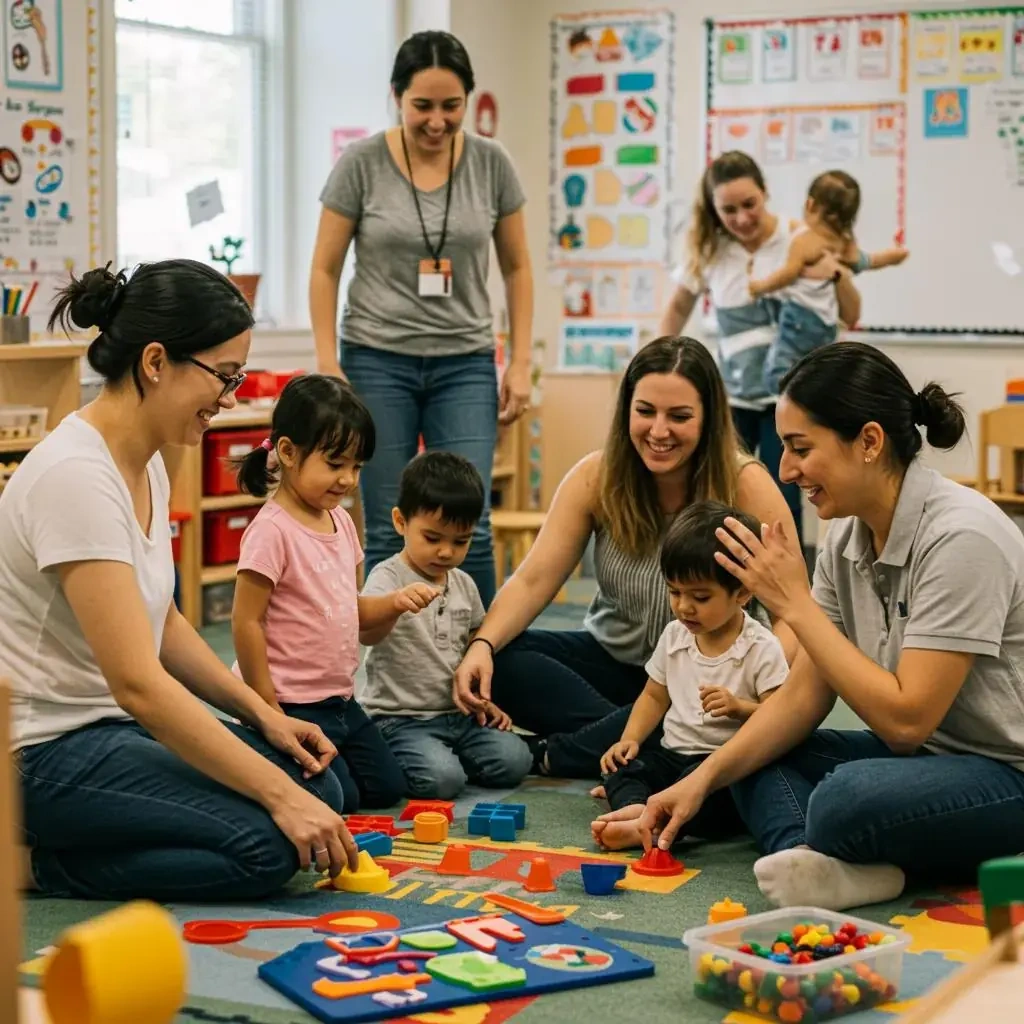
Chroma Early Learning Academy treats parent involvement as an essential partnership that strengthens early childhood development, supports kindergarten readiness, and creates consistent learning pathways between home and classroom. This article explains practical tactics—open communication, regular parent-teacher conferences, family nights, volunteer opportunities, and digital updates—that parents can use to stay engaged and positively influence their child’s developmental outcomes. Parents and caregivers will learn the academy’s philosophy on family engagement, measurable benefits for academic and social-emotional growth, the communication channels used to keep families informed, and step-by-step ways to participate in daily learning. The piece also provides how-to home activities, workshop and event options, and concrete next steps such as scheduling a tour or enrolling in GA Pre-K Lottery and Kindergarten Readiness programs. Throughout, keywords like chroma early learning academy involvement, Chroma Academy family engagement, parent involvement early learning, and preschool parent partnership are woven into practical guidance so readers can apply tactics immediately and see measurable results.
What Is Chroma Academy’s Philosophy on Parent Involvement?
Chroma Early Learning Academy’s philosophy on parent involvement defines families as primary partners in early childhood education, working together with teachers to support a child’s growth and wellbeing. The reason this partnership matters is that consistent collaboration aligns home routines with classroom goals, which improves learning continuity, social-emotional development, and early literacy outcomes. The specific benefit of this philosophy is clearer developmental monitoring and stronger child readiness for transitions such as entering kindergarten. Core principles include respect for family priorities, two-way communication, shared goal-setting, and culturally responsive practices that honor each child’s background. These principles lead directly to classroom practices and community-building events that create practical opportunities for meaningful parent participation and ongoing collaboration.
How Does Chroma Academy Define Family Engagement?
Chroma Academy defines family engagement as a shared responsibility in which educators and parents actively exchange information, set learning goals, and participate in activities that reinforce development across settings. This approach works because it links observed classroom behaviors and milestones to at-home routines, giving parents actionable steps to support targeted skills like language and self-regulation. Practical examples of family engagement include daily digital updates with learning notes, structured parent-teacher conferences for goal setting, and family nights that model at-home activities. Defining engagement this way shifts the relationship from episodic updates to continuous partnership and sets expectations for predictable, supportive interactions. The next section explains why this style of engagement is essential based on current research and observed outcomes.
Why Is Parent Involvement Essential in Early Childhood Education?
Parent involvement is essential because early years are a sensitive period when consistent experiences shape neural pathways responsible for learning, self-regulation, and social skills. Recent studies and authoritative analyses indicate that engaged parenting practices correlate with improved vocabulary growth, school readiness scores, and social competence; this evidence shows why family engagement is a high-impact strategy for early learning programs. For example, a focused literacy routine at home increases letter knowledge and emergent reading skills, which accelerates readiness for formal schooling. Understanding this research-backed rationale sets the stage for how Chroma Academy translates evidence into classroom-home strategies that parents can replicate. That translation happens through collaborative partnership tactics described next.
Parent-Teacher Conferences: Strengthening Family-School Partnerships for Child Success The effectiveness of parent-teacher conferences in strengthening family-school partnerships has been a subject of considerable research. These conferences serve as a crucial bridge, facilitating communication and collaboration between educators and parents. By providing a dedicated time for discussion, they allow for a deeper understanding of a child’s progress, challenges, and strengths within the educational setting. This shared understanding is vital for creating a cohesive support system that extends from the classroom to the home, ultimately benefiting the child’s overall development and academic success. The Effectiveness of Parent-Teacher Conferences in Strengthening Family-School Partnerships, 2024
How Does Chroma Academy Foster Collaborative Parent Partnerships?

Chroma Academy fosters collaborative partnerships with families by scheduling regular touchpoints, offering volunteer roles, hosting family nights, and setting shared developmental goals during conferences. Each tactic works by creating predictable opportunities for parents to observe classroom learning, receive coaching from teachers, and practice skills at home; this mechanism strengthens the home–school learning loop. Examples include goal-setting meetings where teachers and parents agree on two focus skills, volunteer shifts that let caregivers assist with a classroom project, and family events that model learning routines. These collaborative approaches build trust and create a feedback loop that informs individualized supports for each child. The next section outlines concrete benefits that result when parents take an active role in Chroma Academy programs.
What Are the Key Benefits of Parent Involvement at Chroma Academy?
Parent involvement at Chroma Academy yields measurable benefits across academic performance, social-emotional development, lifelong learning attitudes, and parental peace of mind. The mechanism behind these benefits is alignment: when families reinforce classroom objectives at home, children receive repeated, consistent practice that cements new skills and behaviors. Specific benefits include faster vocabulary growth, stronger early math concepts, improved self-regulation, and more confident transitions to kindergarten. These outcomes support long-term school success and are observable across program levels from Infant Care through Preschool and Kindergarten Readiness programs. The following subsections map academic, social-emotional, motivational, and parental outcomes with concrete activities parents can adopt to realize those benefits.
How Does Parent Engagement Enhance Academic Performance?
Parent engagement enhances academic performance by increasing the frequency and quality of practice for early literacy and numeracy skills, which accelerates mastery and classroom readiness. For example, short daily shared reading sessions build vocabulary and narrative skills while simple counting games reinforce number sense; both practices directly map to preschool and GA Pre-K learning goals. The mechanism is repeated, meaningful exposure to targeted skills in varied contexts, which strengthens memory and transferability to classroom tasks. Parents who collaborate on learning targets identified during conferences can see measurable improvements in assessments and everyday performance. These academic benefits are particularly evident when families follow teacher-recommended activities and track progress collaboratively.
Different program levels show distinct outcomes when parent engagement is consistent.
| Program Level | Targeted Activity | Expected Outcome |
|---|---|---|
| Infant Care | Responsive talk during routines | Faster early vocabulary and attachment security |
| Toddler Care | Play-based counting and sorting | Improved number sense and attention span |
| Preschool | Shared reading + letter games | Increased emergent literacy and phonological awareness |
What Social and Emotional Growth Results from Family Engagement?
Family engagement supports social and emotional learning (SEL) by reinforcing routines that teach self-regulation, cooperative play, and emotional labeling across settings. When parents and teachers use consistent language to name feelings and model calming strategies, children internalize these skills and demonstrate improved impulse control and peer interaction. Practical at-home practices include emotion coaching during conflict, predictable morning routines for security, and structured playdates to practice sharing. The reason these approaches work is that consistent reinforcement across home and school stabilizes expectations and reduces behavioral friction. Next, we examine how these SEL gains fuel curiosity and a sustained interest in learning.
How Does Parent Involvement Inspire a Lifelong Love of Learning?
Parent involvement inspires a lifelong love of learning by creating positive, curiosity-driven experiences that associate learning with enjoyment and mastery. When caregivers engage in playful exploration, ask open-ended questions, and celebrate small successes, children develop intrinsic motivation and confidence that support later academic effort. Teachers at the academy mirror these practices in classroom routines so the child experiences continuity between environments and views learning as a shared family value. Over time, this continuity translates into habits—like curiosity, persistence, and reflection—that sustain academic engagement beyond preschool. The next subsection explains how parental involvement also reduces anxiety and increases family confidence in the educational process.
What Peace of Mind Do Parents Gain Through Active Participation?
Active parental participation produces peace of mind by increasing transparency, predictability, and trust between families and educators, which reduces uncertainty about a child’s daily experience and progress. When parents receive timely digital updates, clear conference notes, and guidance for at-home activities, they feel equipped to support development and make informed decisions. This emotional benefit is produced by reliable communication channels and collaborative goal-setting that provide evidence of progress and next steps. Parents can use a simple quote template to share observations with teachers, further strengthening the partnership and clarifying expectations. Understanding these emotional and practical advantages leads naturally into the specific communication methods Chroma Academy uses to maintain consistent contact.
Digital Tools for Early Childhood Development: Supporting Parents and Caregivers Digital tools have become increasingly prevalent in supporting early childhood development (ECD) globally. Accelerated by the COVID-19 pandemic and the closure of childcare facilities and other ECD-focused programs, parents and caregivers have sought alternative ways to support young children’s learning and development. The availability and quality of new digital technologies have provided an opportunity to bridge this gap, with the potential to reach a wider audience and improve access and quality of support to young children. This report offers insight into the current technology-enabled tools designed to support the parents, caregivers, and the early childhood workforce of children ages 0 to 5 worldwide. Harnessing Technology: A Review of Digital Tools Supporting Parents and the Early Childhood Workforce., M Neuman, 2023
Key Communication Channels for Parent Engagement at Chroma Academy
Chroma Academy uses multiple communication channels—daily digital updates, newsletters, parent-teacher conferences, and family events—to create predictable, accessible information flows that support ongoing involvement. The mechanism is redundancy plus relevance: multiple channels increase the chance that important information reaches caregivers, while targeted content ensures messages are actionable for child development goals. Specific benefits include immediate visibility into daily learning, structured opportunities for goal-setting, and community-building that encourages participation. By mapping channels to use cases and frequency, families know when to expect updates and how to respond, which improves engagement and follow-through. The following H3 sections describe each channel, conference practices, digital tools, and parent resources in more detail.
What Open Communication Channels Does Chroma Academy Use?
Chroma Academy employs a mix of in-person meetings, scheduled newsletters, and digital updates to provide timely and relevant information for parents. Each channel serves a different use case: newsletters convey calendar items and program highlights, conferences focus on individualized goal-setting, and digital updates deliver real-time photos and learning notes. Parents benefit because they receive both big-picture context and day-to-day evidence of progress, which supports informed involvement. Best-practice examples include weekly theme summaries in newsletters and brief daily learning notes in digital updates that suggest a 2–3 minute at-home activity. These coordinated channels create a predictable rhythm of communication that reduces uncertainty and deepens collaboration.
| Communication Channel | Primary Use Case | Frequency / Example |
|---|---|---|
| Weekly Newsletter | Program updates, upcoming events | Weekly summary with topic previews |
| Digital Updates (photos/notes) | Daily learning evidence and home activities | Daily brief notes and photo highlights |
| Parent-Teacher Conferences | Individual goals and progress plans | Scheduled twice per year or on request |
| Family Nights / Events | Community building and modeled activities | Monthly or quarterly themed gatherings |
Digital Technology in Education: Enhancing Family Engagement and Communication This article discusses family engagement with digital technology in inclusive education focusing on the development of caring relationships, diversity of communication skills within family and educational communities, the integration of the classroom and home, and being a media mentor to families. It reviews research related to family engagement with media technology and seeks to provide a flexible guide which may be adapted to diverse environments to assist in developing technology-infused family engagement and communication strategies. The educational practices discussed consider the importance of the family in the technology hybridized classroom and consider socioeconomic, cultural, linguistic, and human diversity as factors that impact communication and family engagement in promoting positive educational relationships Family communication and engagement with digital technology: approaches and strategies, 2022
How Do Parent-Teacher Conferences Facilitate Goal Setting?
Parent-teacher conferences at Chroma Academy are structured to create clear, measurable goals and an agreed plan for practice across home and school environments. A typical agenda includes a quick progress summary, two prioritized developmental goals, suggested at-home activities, and a timeline for follow-up, producing a concrete action plan. Preparing for a conference involves reviewing recent digital updates and noting behaviors to discuss, which helps families and teachers align observations and set realistic next steps. Expected follow-up includes brief check-ins via chosen channels and a reassessment meeting to measure progress against goals. This structure ensures conferences move beyond updates into joint accountability and skill-building strategies that parents can implement at home.
How Are Digital Tools Used for Real-Time Parent Updates?
Digital tools provide real-time snapshots—photos, brief learning notes, and incident summaries—that give parents immediate, context-rich evidence of daily learning and wellbeing. These updates work because they translate classroom moments into actionable tips parents can use that evening, such as a suggested reading prompt tied to a class story. For busy families, push notifications and concise summaries offer high-value touchpoints without overwhelming detail, making engagement sustainable. Privacy and consent are handled through established classroom policies and opt-in practices that respect family choices and data protections. These digital routines reduce information gaps and enable parents to reinforce daily learning objectives at home.
What Resources Are Available for Parent Education and Support?
Chroma Academy provides a Parent Handbook, downloadable activity guides, and workshops to support parent education and practical skill-building at home. These resources function as reference tools and step-by-step guides that model how to implement classroom-aligned activities and address common developmental concerns. Parents can access structured handouts that describe development milestones, suggested routines, and scripts for transitions, which increases confidence and consistency. Workshop schedules and event announcements supplement these materials and create hands-on opportunities to practice new approaches alongside educators. The next H2 shows tangible ways parents can use these supports to get involved directly in daily and special activities.
What Are Practical Ways for Parents to Get Involved at Chroma Academy?
Practical involvement options at Chroma Academy include classroom volunteering, attending family events, using home routines that support kindergarten readiness, and joining parent workshops. The mechanism behind each option is clear: participation provides parents with direct exposure to classroom methods, coaching from staff, and opportunities to replicate learning practices at home, which reinforces child progress. Benefits include hands-on learning for caregivers, increased trust with teachers, and deeper insight into developmental milestones. Below are concrete how-to steps for volunteering, event participation, home readiness activities, and joining workshops that parents can follow immediately.
Practical volunteer and participation roles parents can take at the academy include:
- Classroom Assistant Shifts: Support small group activities under teacher supervision.
- Reading Volunteer: Lead a short story time or help with book handling.
- Event Helper: Assist with setup, activity stations, or family engagement booths.
These roles strengthen parent-teacher relationships and provide visible, routine ways for families to be part of daily learning while modeling expectations for children.
How Can Parents Volunteer in Classrooms and Events?
To volunteer, parents typically contact the classroom lead to express interest, complete any required clearances or orientation, and coordinate a schedule that aligns with classroom needs. Volunteer tasks often include assisting with art projects, setting up learning centers, or supporting outdoor play while following staff guidance for routines and safety. Clear expectations—arrival times, duration, and responsibilities—help volunteers contribute meaningfully without disrupting instruction. Safety considerations and respect for classroom confidentiality are emphasized to protect children’s privacy and maintain program integrity. This structured process streamlines participation and increases the consistency of family involvement across program levels.
What Family Events and Activities Encourage Participation?

Family events—such as themed Family Fun Days, cultural celebrations, and interactive reading nights—are designed to model at-home learning strategies and build community connections among families and staff. Each event includes hands-on stations where parents practice activities with their children, brief demonstrations by teachers, and take-home materials that reinforce skills. A sample event timeline might include a welcome circle, three rotating activity stations, and a closing reflection that prompts families to set one at-home learning goal. These events foster belonging, recruit volunteers, and create shared experiences that encourage repeat engagement. Accessibility and scheduling considerations—such as evening times or childcare at events—help maximize family participation.
How Can Parents Support Kindergarten Readiness at Home?
Parents can support kindergarten readiness with consistent daily routines that emphasize early literacy, math concepts, self-help skills, and social routines like turn-taking. Research-backed activities include shared reading with predictive questions, short counting games using household items, naming colors and shapes during play, and practicing independent dressing and snack routines. Daily routines of 10–15 minutes focused on these skills produce measurable improvements in readiness over weeks and months, especially when aligned with classroom goals. Parents should use teacher-provided checklists and goal notes from conferences to prioritize activities and monitor progress. The next subsection explains straightforward steps to join parent workshops and educational seminars offered by the academy.
What Are the Steps to Join Parent Workshops and Educational Seminars?
Joining a parent workshop typically involves checking the academy’s event announcements, registering by following the provided instructions, and completing any pre-work suggested by facilitators to get the most from the session. Workshops cover topics such as early literacy strategies, behavior guidance, separation support for infants, and after-school routines, and are structured with hands-on practice and take-home materials. Parents are encouraged to bring specific questions or observations to receive tailored advice, and follow-up resources are often provided to reinforce learning. Workshops link directly to program goals—examples include sessions aligned with Infant Care routines and After School support strategies—so attendance translates into immediate at-home application. Having covered practical ways to be involved, the next H2 describes home-based learning supports parents can use daily.
How Can Parents Support Learning at Home with Chroma Academy Resources?
Chroma Academy aligns home resources with classroom curriculum so parents can reinforce targeted skills in short, effective activities that fit family routines. The mechanism is alignment and repetition: when home activities mirror classroom objectives, children receive coherent practice that accelerates skill mastery. Resources include early literacy and math activity recipes, downloadable quick-sheets, and scripted transition supports for common challenges like separation anxiety. Using these materials increases the fidelity of at-home practice and helps parents track progress toward developmental goals set during conferences. The following subsections provide concrete activity examples, alignment strategies, transition tips, and instructions for accessing downloadable guides.
What Early Literacy and Math Activities Can Parents Use?
Parents can implement short, developmentally appropriate literacy and math activities that require minimal materials but produce strong learning effects. For literacy, examples include interactive read-alouds with prediction questions, letter-sound hunts during daily routines, and storytelling with picture prompts. For math, simple activities like sorting household items by size or color, counting steps during walks, and comparing quantities during snack time build number sense. Each activity should state age range, recommended time (5–15 minutes), and the learning objective to make practice intentional and efficient. These small, regular practices map directly to classroom objectives and make progress measurable through observation and occasional teacher check-ins.
- Early literacy activities sample: Prediction Read-Alouds: Pause before a page and ask the child what will happen next. Label-and-Listen: Name objects and encourage the child to repeat new words. Story Sequencing: Use three-picture cards to retell a short story in order.
- Early math activities sample: Counting with Objects: Count spoons or blocks during cleanup. Sorting Game: Sort socks or toys by color or size for categorization practice. Number Walks: Count steps or houses to integrate movement and numeracy.
These activity sets are practical, low-prep, and designed to be repeated to reinforce emerging skills; next, we explain how these resources directly complement classroom curriculum.
How Do Home Resources Complement Classroom Curriculum?
Home resources are designed to mirror classroom learning objectives so that practice at home reinforces teacher-led instruction and accelerates skill transfer. For example, if a preschool literacy unit focuses on rhyming, take-home sheets suggest three short rhyming games and a nightly read-aloud plan to reinforce the same phonological skills. Suggested frequency—daily short sessions or targeted weekly focuses—helps families manage time while maintaining consistent exposure. Tracking progress through simple checklists or brief notes in digital updates allows teachers and parents to observe change and adjust goals collaboratively. This alignment reduces friction and improves the efficiency of practice across settings.
What Tips Help Parents Manage Transitions Like Separation Anxiety?
Managing separation anxiety effectively involves a predictable routine, a short and positive goodbye script, and gradual exposure that builds the child’s confidence in the classroom environment. A five-step plan includes: prepare in advance with brief conversations, create a goodbye ritual, keep departures brief and confident, follow up with a predictable pick-up routine, and communicate observations with teachers for coordinated support. Sample comforting scripts use consistent phrasing and positive reinforcement, such as “I’ll see you after snack; have fun with the painting.” Parents should watch for signs of escalating distress and consult staff if anxiety persists beyond expected adjustment periods. These transition supports reduce stress and strengthen the child’s ability to engage in classroom learning, and parents can find downloadable scripts and quick-sheets for these steps in the resource hub.
Where Can Parents Access Downloadable Guides and Activity Sheets?
Chroma Academy offers a suite of downloadable resources—Parent Handbook PDF, Home Learning Activity Guides, and Workshop Schedules—each named for easy reference and designed for printing or digital use. These files provide structured activity recipes, developmental milestone checklists, and suggested daily routines that parents can implement immediately. Using these materials is straightforward: download the relevant sheet, review the short suggested activities, and integrate one new practice into the daily routine for two weeks to observe change. Resource descriptions typically include file names and short usage notes so parents know which guides match their child’s age and goals. Accessing these downloads equips families with practical tools that match classroom strategies and supports ongoing engagement.
What Parent Workshops and Events Does Chroma Academy Offer?
Chroma Academy’s workshops and family events are designed to teach practical strategies, build community, and model activities parents can use at home. Workshops cover themes like early literacy, behavior strategies, transitions for infants, and after-school routines, and events such as Family Fun Days provide hands-on practice and social connection. The mechanism behind workshops and events is experiential learning: parents observe, practice, and receive materials that translate directly to at-home application. Registration is straightforward and events are scheduled to maximize accessibility and participation. The subsections below present workshop topics, the design and outcomes of Family Fun Days, registration steps, and success stories illustrating impact.
What Topics Are Covered in Parent Education Workshops?
Workshops address practical topics chosen to meet common family needs and align with program objectives, including early literacy techniques, positive behavior strategies, separation support for infants, and after-school routine management. Each workshop includes targeted takeaways such as three at-home activities, a brief practice session, and downloadable follow-up materials tailored to specific age groups, from Infant Care to After School programming. Recommended workshops vary by child’s age and focus on the most relevant skills—literacy for preschoolers, self-help routines for toddlers, and transition strategies for school-age children. Clear outcomes include increased parent confidence, observable at-home practice, and measurable improvements in targeted behaviors when families apply workshop strategies consistently.
| Event | Topic | Action for Parents |
|---|---|---|
| Literacy Workshop | Interactive reading strategies | Practice three nightly read-aloud techniques |
| Behavior Strategies | Positive guidance and routines | Implement a predictable morning routine and praise plan |
| Infant Support | Separation and attachment coaching | Use short goodbye rituals and soothing techniques |
| After School Seminar | Homework and routine management | Establish a consistent after-school checklist |
How Do Family Fun Days Build Community and Engagement?
Family Fun Days are structured around interactive stations that allow families to practice classroom-aligned activities together, meet staff in informal settings, and sign up for volunteer roles or workshops. The design includes a welcome circle, learning stations, and a reflection that prompts families to commit to one at-home practice; measurable community outcomes include attendance numbers, new volunteer sign-ups, and workshop registrations that follow the event. These gatherings build trust, normalize participation, and create peer support networks that extend engagement beyond a single event. Accessibility measures—like varied timing and inclusive activity design—help ensure a broad range of families can participate and benefit.
How Can Parents Register for Upcoming Workshops and Events?
To register, parents follow the academy’s provided event announcements and registration procedures which specify session times, recommended participants, and any preparation needed. Registration steps typically include selecting an event, indicating the child’s age group or classroom, and noting any accommodations needed for participation. Payment or fee notes are included where relevant, and contact points are provided for questions or special requests. Clear registration processes ensure parents can plan attendance and apply workshop takeaways immediately, which increases the likelihood of sustained behavior change. The next section highlights brief anonymized success stories that illustrate the impact of these events.
What Success Stories Highlight the Impact of These Events?
Success stories demonstrate the practical impact of workshops and events through short vignettes that show before-and-after outcomes, such as improved bedtime routines after an evening workshop or reduced separation distress after an infant support session. One example describes a family who implemented three strategies from a literacy workshop and observed measurable increases in story comprehension within six weeks. Another vignette shows how volunteer involvement led a caregiver to adopt classroom techniques at home for consistent behavior support. These concise stories provide relatable evidence of positive change and encourage other parents to participate in upcoming offerings. Having explored events and workshops, the final H2 explains clear next steps for parents ready to become more involved.
How Can Parents Take the Next Steps to Get Involved at Chroma Academy?
Chroma Academy provides clear, actionable next steps for parents who want to increase involvement: schedule a tour or enrollment consultation, download the Parent Handbook, sign up for workshops or the GA Pre-K Lottery, and enroll in Kindergarten Readiness programs. These steps convert interest into participation by offering structured entry points that match varying levels of commitment and timelines. The mechanism is friction reduction—clear CTAs and structured options make it easy for families to engage at the right level and receive support as they join the parent community. The following H3s break down scheduling, handbook access, contact procedures, and benefits of joining the Chroma parent community.
How Do Parents Schedule a Tour or Enrollment Consultation?
Parents schedule a tour or consultation by contacting the academy through the stated scheduling channels and selecting a time that provides a guided view of classrooms, a review of program options, and a discussion about developmental goals. A typical tour includes observation of daily routines, a brief meeting with staff about enrollment pathways like GA Pre-K Lottery, and answers to questions about program fit and readiness. Parents should prepare a short checklist of priorities—questions about curriculum, communication practices, and available supports—to make the most of the visit. Follow-up typically includes next steps for enrollment and recommended workshops that match the child’s developmental needs. This process helps families make informed decisions and begin collaborative planning with staff.
Where Can Parents Find the Parent Handbook and Policies?
The Parent Handbook contains summarized policies on attendance, pick-up procedures, safety protocols, and program philosophies, and is available as a downloadable PDF resource for families. The handbook’s purpose is to provide transparent expectations and practical guidance that align parent actions with classroom routines, ensuring consistency and safety. Key sections highlight daily schedules, communication norms, and how to access additional supports or workshops. Regular updates to the handbook reflect program refinements and are noted in event communications so families are aware of new resources or procedural changes. Knowing where to find and how to use the handbook streamlines participation and clarifies mutual responsibilities.
How Can Parents Contact Staff for Questions or Support?
Parents can contact staff through designated classroom leads, general center contact channels, or during scheduled conferences, with expected response practices that prioritize timely two-way communication. Clear response SLAs—such as acknowledging messages within a set timeframe and providing a timeline for substantive follow-up—help families know what to expect and when to escalate concerns. For urgent matters, parents are advised to follow the center’s specified protocols for immediate assistance, and for developmental questions, teachers can usually provide coaching or schedule a conference. These contact procedures maintain accountability and ensure that questions about child development, scheduling, or resources are addressed promptly. The final H3 summarizes the benefits of joining the parent network.
What Are the Benefits of Joining the Chroma Academy Parent Community?
Joining the Chroma Academy parent community provides peer support, priority access to workshop registrations and events, and direct visibility into program updates and resources that support a child’s learning path. Membership benefits include shared tips from other families, invitations to volunteer opportunities, and an insider view of curriculum focuses that help parents align home activities. These supports create a network that sustains engagement and reduces the burden of problem-solving alone, while providing tangible enrollment advantages for programs like GA Pre-K Lottery and Kindergarten Readiness programs. Families that participate regularly report greater confidence in supporting development and a clearer sense of partnership with educators, which encourages continued involvement and stronger outcomes for children.