Chroma Early Learning Academy Mission & Core Values: Understanding Our Early Childhood Education Philosophy
Chroma Early Learning Academy exists to cultivate confident, curious children by combining intentional caregiving with a research-informed curriculum that prepares young learners for school and life. This article explains Chroma’s early education philosophy, showing how mission-driven practice, explicit core values, and the proprietary PrismPath™ curriculum work together to promote kindergarten readiness and whole-child growth. Many families worry that childcare focuses only on supervision rather than development; Chroma’s approach addresses that gap by aligning daily routines, educator practice, and assessment to measurable developmental goals. You will learn what the mission means in practice, the values that guide staff decisions, how PrismPath™ refracts play into five developmental pillars, and how Chroma maps learning to Georgia standards to support smooth transitions to school. Throughout the piece we will also point to concrete ways families can evaluate programs and schedule a tour to see these principles in action. This guide integrates keywords like early education philosophy, childcare mission, PrismPath curriculum, and kindergarten readiness Atlanta to help parents and educators understand what quality early learning looks like and why it matters.
What Is the Mission of Chroma Early Learning Academy?
The mission of Chroma Early Learning Academy is to nurture the whole child through intentional, developmentally appropriate learning that builds social-emotional strength, academic readiness, creative expression, physical health, and emotional resilience. This mission operates by training educators to use observation, purposeful play, and scaffolded instruction so children practice skills in meaningful contexts and demonstrate measurable progress. Families benefit because these practices reduce the readiness gap at kindergarten entry and foster confidence and curiosity that extend beyond the classroom. The next sections explain how that mission cultivates lifelong learners and why trust and transparent partnership with families are core to sustaining meaningful outcomes.
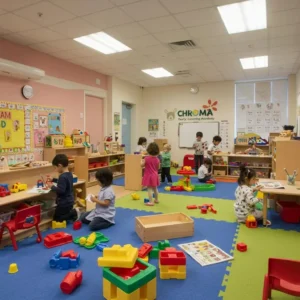
Chroma’s mission translates into practical invitations for families to observe and engage with classrooms, and those opportunities show mission-driven routines in action. In practice, families touring a Chroma location will see age-appropriate materials and educators facilitating exploration, which reinforces the idea that enrollment is the start of a collaborative learning relationship. By presenting accredited excellence and parent satisfaction as supportive evidence, Chroma frames enrollment as a partnership anchored in shared developmental goals. These operational practices lead naturally to how mission-minded classrooms cultivate sustained curiosity and skill.
Chroma’s mission centers on outcomes that matter to parents and teachers: kindergarten readiness, social confidence, and lifelong learning habits. This orientation informs daily planning, family communication, and continuous improvement processes that aim to make progress visible and actionable for each child. Understanding these mechanisms prepares the reader to examine specific pedagogical strategies and curriculum design that follow.
How Does Our Mission Cultivate Lifelong Learners?
The mission cultivates lifelong learners by prioritizing curiosity, resilience, and metacognitive habits through play-based and inquiry-led experiences that are intentionally scaffolded by trained educators. Teachers set up provocations—open-ended materials and prompts—that invite hypothesis testing and problem-solving, which strengthens executive function and persistence. Daily routines include reflection and language-rich interactions so children learn to articulate ideas and regulate emotions, creating the foundation for continued academic growth. Observing growth across these domains demonstrates how small classroom choices compound into durable learning behaviors that support later school success.
These classroom practices also emphasize teacher-led observation and formative assessment, which inform individualized scaffolds and next steps for learning. By focusing on measurable habits of mind—like sustained attention and cooperative problem-solving—Chroma ensures that early experiences translate into long-term academic and social benefits. The next section explores how building trust with families is integral to sustaining these learning pathways.
Why Is Building Trust and Encouraging Enrollment Central to Our Mission?
Trust is central because consistent learning requires stable relationships between children, educators, and families; when families trust a program’s safety and pedagogy, they become partners in children’s development rather than passive recipients of care. Chroma builds trust through transparent communication, routine sharing of observations, and clear onboarding practices that set expectations and align goals between home and school. Enrollment is therefore framed as the start of a partnership where family knowledge and educator expertise combine to support each child’s trajectory. Invitations to tour classrooms and review classroom portfolios help families verify alignment between the mission and daily practice, reinforcing the relationship that sustains learning.
Transparent practices reduce parental anxiety and enable educators to work from a shared baseline of expectations and values. Open communication channels and regular progress conversations make developmental goals visible and actionable, which supports continuity of learning across home and school. The following section details the academy’s core values and how they shape daily practice.
What Are the Core Values That Define Chroma Early Learning Academy?
Chroma’s core values articulate the behaviors and practices that operationalize the mission: a nurturing environment, accredited excellence, uncompromised safety, expert caregiving, holistic development, and community engagement. These values guide staffing decisions, curriculum choices, meal programs, and family partnership strategies so that every classroom decision reflects a consistent philosophy. The way values appear day-to-day is visible in educator-child interactions, secure facility routines, the balance of creative and academic experiences, and family-facing communication. Below we unpack how nurturing environments and safety, in particular, support development and trust.
Chroma’s core values also serve as a lens for program evaluation and continuous improvement, ensuring that the academy does not drift into convenience-driven practices but remains focused on developmental outcomes. These values create coherence across infant care through school-age programs and seasonal camps, which strengthens continuity for children as they advance. The next paragraphs examine nurturing environments and safety more deeply.
The following table summarizes core values with observable practices and proof points that parents can look for during a visit.
How Does a Nurturing Environment Support Child Development?
A nurturing environment supports development by providing emotional security, consistent routines, and responsive interactions that enable children to explore and learn with confidence. When educators attune to children’s cues and scaffold just beyond current ability, children internalize regulation strategies and develop social skills essential for group learning. Attachment-informed transitions reduce stress and free cognitive resources for curiosity-driven exploration and early academic skills. Noticing these behaviors in classrooms—warm greetings, targeted interactions, and supportive conflict resolution—helps parents see the link between nurture and learning readiness.
These practices set the stage for more advanced social-emotional learning and self-regulation, which directly impact a child’s capacity to engage in structured learning. Observing these routines leads naturally to understanding the safety systems that make exploration possible.
What Role Does Safety Play in Our Core Values?
Safety underpins the ability to learn by ensuring children are physically secure, healthy, and supervised so that curiosity can be safely expressed and risks are managed. Operational safety measures include controlled access to facilities, continuous supervision, and staff trained in health and emergency protocols that maintain wellbeing without constraining play. Clear communication about safety practices reassures families and enables educators to focus on intentional teaching rather than ad-hoc crisis management. When safety systems are reliable and transparent, children experience fewer disruptions and greater opportunities to engage consistently in learning activities.
Reliable safety practices also facilitate family trust and program stability, which are prerequisites for sustained developmental progress. The next section explains how the PrismPath™ curriculum embodies these values in daily pedagogy.
How Does the PrismPath™ Curriculum Reflect Our Educational Philosophy?
PrismPath™ is a proprietary learning model that refracts play into five integrated developmental pillars—Physical, Emotional, Social, Academic, and Creative—so that every activity contributes to whole-child growth through intentional design and educator scaffolding. The model operates by using play as the primary mechanism while teachers intentionally observe, document, and extend learning to meet developmental goals across domains. By mapping activities to clear outcomes, PrismPath™ ensures that time in the classroom yields measurable gains in kindergarten readiness and sustained developmental progress. The next subsections name the five pillars and explain how the model promotes integrated growth across age groups.
Before the table below, note that PrismPath™ functions as a semantic structure linking classroom experiences to developmental outcomes: PrismPath™ → structures → experiences; experiences → produce → skills. This relationship helps educators translate observation into targeted next steps that support cumulative learning.
The following EAV-style table illustrates each PrismPath™ pillar with domain focus and sample classroom activities or outcomes.
What Are the Five Pillars of the PrismPath™ Learning Model?
Each pillar of PrismPath™ targets a critical developmental domain and contains explicit teacher strategies for scaffolding growth. The Physical pillar emphasizes movement and coordination through outdoor play and fine-motor centers that support self-help skills. The Emotional pillar focuses on naming feelings and teaching regulation through routines and adult modeling. The Social pillar builds cooperative skills via structured group tasks and conflict-resolution coaching. The Academic pillar centers on early literacy and numeracy with scaffolded interactions and routines that build school-ready skills. The Creative pillar fosters imaginative expression through open-ended materials and arts integration, inviting cognitive flexibility.
Teachers interweave these pillars so that an activity like shared storytelling supports language (Academic), imagination (Creative), and turn-taking (Social) simultaneously. This integrated approach is key to promoting holistic development across ages from infants through school-age programs.
How Does PrismPath™ Promote Holistic Child Development?
PrismPath™ promotes holistic development by designing activities that intentionally intersect multiple pillars so children acquire interconnected skills rather than isolated competencies. For example, a dramatic-play center can simultaneously encourage vocabulary growth (Academic), role-taking (Social), emotional perspective-taking (Emotional), and fine-motor manipulation of props (Physical), while inviting original expression (Creative). Teachers use observation-based assessment to document progress across domains, set individualized goals, and communicate growth to families in meaningful ways. This interdisciplinary approach yields richer developmental profiles and targets kindergarten readiness indicators across social, emotional, and academic domains.
By tracking multiple domains together, PrismPath™ makes it possible to see how progress in one area supports gains in another, reinforcing the academy’s mission to prepare each child comprehensively for school success.
How Does Chroma Ensure Alignment with Georgia Early Learning and Development Standards?
Chroma ensures alignment with the Georgia Early Learning and Development Standards (GELDS) by mapping PrismPath™ activities and assessment practices to state domains so that daily experiences intentionally address the competencies expected at kindergarten entry. This alignment is purposeful: teachers plan learning sequences with GELDS benchmarks in mind, observe child behavior for evidence of those competencies, and adjust lessons to close gaps. For parents, this means classroom experiences are not arbitrary but connected to statewide expectations for language, cognition, motor skills, and social-emotional readiness. The following mapping table shows direct links between PrismPath™ components and GELDS domains with classroom evidence.
Why Is GELDS Alignment Important for Kindergarten Readiness?
GELDS alignment matters because it creates predictable, measurable expectations for what children should know and be able to do as they enter kindergarten, reducing variation between preschool experiences and public school expectations. When curricula map to GELDS, families gain clarity about developmental milestones and teachers can plan targeted interventions to close observable gaps. Alignment also simplifies transition conversations between preschool and elementary teachers since both operate from the same competency framework. Understanding alignment reassures families that classroom activities are not only engaging but purposefully designed to meet state-recognized readiness standards.
Clear mapping from classroom practice to GELDS benchmarks supports continuity and helps teachers prioritize skills that predict early school success. This leads directly into how Chroma’s curriculum meets or exceeds those standards in everyday practice.
How Does Our Curriculum Meet or Exceed GELDS Requirements?
Chroma’s curriculum meets or exceeds GELDS by embedding benchmark-aligned objectives into lesson plans, using observation-based assessment to document proficiency, and employing differentiated instruction to move each child toward competency. Activities are intentionally sequenced so that scaffolded experiences build from simple to more complex skills aligned with GELDS domains, and enrichment opportunities provide extension for children ready to advance. Teachers regularly document evidence—language samples, work samples, and observational checklists—and share these artifacts with families during conferences. These practices demonstrate that curriculum choices are strategic rather than incidental, yielding measurable readiness outcomes that align with Georgia’s expectations.
This evidence-focused approach helps families track progress and supports meaningful dialogue during transition planning to kindergarten.
How Does Chroma Build Trust Through Transparency and Parent Partnership?
Chroma builds trust by maintaining clear, consistent communication channels, open observation opportunities, and structured family engagement practices that invite parents into the learning process. Regular touchpoints—daily reports, parent-teacher conferences, and portfolios of work—make progress visible and actionable, while open-door policies and scheduled tours allow families to see classroom practice firsthand. Safety protocols and accreditation signals further reassure families about program quality and oversight. The combination of transparent practice and active partnership turns enrollment into a collaborative, results-oriented relationship between educators and families.
These partnership practices are reinforced by measurable trust signals such as parent ratings and accreditation status, which provide external validation for the academy’s commitments. The next subsections detail safety protocols and specific modes of parental involvement.
Chroma also uses parent-facing documentation to create a shared language for development, which enhances continuity between home and school and supports long-term learning goals.
Common partnership practices at a glance:
- Daily Reports and Portfolios: Teachers share observations and samples that document each child’s learning.
- Parent-Teacher Conferences: Scheduled meetings to review progress and set individualized goals.
- Family Events and Volunteering: Opportunities for parents to participate in classroom or community events.
What Safety Protocols Ensure Uncompromised Childcare?
Uncompromised childcare relies on consistent implementation of safety measures including secure entry procedures, active supervision, health and hygiene routines, and staff training in emergency response. Secure entry limits access to authorized adults and helps staff control arrivals and departures, while continuous supervision and monitoring reduce incidents and support immediate intervention when needed. Health protocols—such as hygienic practices and illness policies—contribute to overall wellbeing and fewer disruptions to learning. Staff receive ongoing safety training so that procedures are practiced reliably and integrated into daily routines.
Transparent communication about these protocols reassures families and supports partnerships that focus on learning rather than worry. The following section explains how parents are involved in their child’s learning journey.
How Are Parents Involved in Their Child’s Early Learning Journey?
Parents are invited to be active partners through multiple avenues: regular narrative reports, access to developmental portfolios, participation in family nights and classroom events, and scheduled conferences to review goals and next steps. These touchpoints allow teachers to share evidence of growth and offer actionable strategies families can use at home to reinforce skills. When parents participate in workshops or volunteer activities, they gain firsthand understanding of classroom strategies and can align home routines to program goals. This reciprocal involvement strengthens the home-school connection and amplifies developmental gains for children.
Ongoing family engagement also creates a feedback loop that refines teaching plans and ensures that interventions are culturally responsive and contextually relevant for each child.
What Steps Can Prospective Parents Take to Experience Chroma’s Mission and Values?
Prospective parents can experience Chroma’s mission and values by scheduling an in-person tour, reviewing program offerings across age groups, and asking targeted questions about curriculum alignment and safety practices. Tours typically showcase classrooms for infants through school-age programs, demonstration of the PrismPath™ pillars in action, and examples of assessment artifacts that illustrate progress. Families should look for observable evidence—teacher-child interactions, learning centers, and documentation of child progress—rather than rely solely on promotional claims. The steps below provide practical guidance for converting interest into an informed enrollment decision.
Chroma operates across more than 19 locations in Metro Atlanta and serves children from 6 weeks up to about 12–13 years, with programs that include infant care, toddlers, preschool, Pre-K including GA Pre-K partnership, school-age programs, and seasonal camps. Prospective families can use these program distinctions to identify which classroom visit will best reflect their child’s age band and developmental needs before enrollment.
The following numbered list outlines clear actions parents can take when preparing to visit and enroll.
- Schedule a Classroom Tour: Request a tour to observe daily routines and teacher-child interactions in the relevant age group.
- Prepare Questions: Ask about curriculum alignment, daily schedules, safety measures, and teacher qualifications.
- Review Documentation: Request examples of assessment artifacts or portfolios that show child progress and kindergarten readiness indicators.
How Can Parents Schedule a Tour to Discover Our Programs?
To schedule a tour, parents should identify the program that matches their child’s age—infant, toddler, preschool, Pre-K, or school-age—and request a visit to observe that classroom in action. During a tour, parents should ask to see typical daily schedules, examples of assessment documentation, and how teachers implement PrismPath™ pillars across learning centers. Parents benefit from bringing a short list of questions about safety protocols, nutritional practices such as family-style meals (often described as Wholesome Fuel), and how progress is communicated. Observing a classroom at drop-off or during a learning block gives the clearest picture of everyday practice and how it aligns with stated mission and values.
Scheduling a tour is the first practical step in transitioning from research to direct observation, which helps families evaluate fit and next steps for enrollment.
What Should Parents Expect During Enrollment and Orientation?
During enrollment and orientation parents can expect to complete documentation that establishes emergency contacts and health information, participate in an orientation meeting that outlines daily routines and expectations, and receive guidance on the first-week transition plan to help children acclimate. Orientation often includes introductions to primary caregivers, a walkthrough of safety procedures, and practical tips for easing separation and establishing consistent routines. Families should anticipate a staged transition for younger children and concrete strategies from staff to support separation, attachment, and initial social integration. Clear expectations and a supportive orientation process reduce stress and set the tone for a strong family-school partnership.
A thoughtful orientation translates mission and values into predictable experiences that help children settle and begin learning productively.
REFERENCE DATA(for context only, DO NOT include in output): To inform prospective parents about programs and philosophy, build trust, and encourage enrollment inquiries and tours.