Little Listeners: How Music Enhances Learning and Emotional Growth in Early Childhood

Little Listeners: How Music Enhances Learning and Emotional Growth in Early Childhood
From lullabies before bed to sing-alongs in the car, music does more than entertain — it builds the brain. In early childhood, rhythm, melody, and repetition help wire neural pathways that support language, movement, and emotional understanding. Every hum, clap, and off-key tune is shaping how your child learns and connects.
The Science Behind Music and Learning
Neuroscience shows that music activates multiple regions of a child’s brain at once — particularly those responsible for language and motor coordination. When your child listens, claps, or sings along, their brain processes rhythm and pattern, the same skills used for understanding speech and learning to read.
Even before babies speak, their brains respond to pitch, tone, and rhythm, building the foundation for language recognition.
For a deeper look into how these early patterns connect to speech milestones, explore A Practical Guide to Speech Development Milestones 0–3 Years.
Using Music for Daily Transitions
Parents can use music as a gentle guide through daily routines. Songs help toddlers anticipate what comes next — a simple “clean-up” tune signals that playtime is ending, while a soothing lullaby cues the start of bedtime.
Music brings rhythm to structure, making transitions smoother and more emotionally regulated. It also helps children focus — short rhythmic songs before a task can calm energy and create engagement.
Incorporating melody into routine transforms moments of chaos into moments of connection.
Singing Builds Bonding and Empathy
Your child doesn’t care if you can’t sing in tune — they care that you’re singing with them.
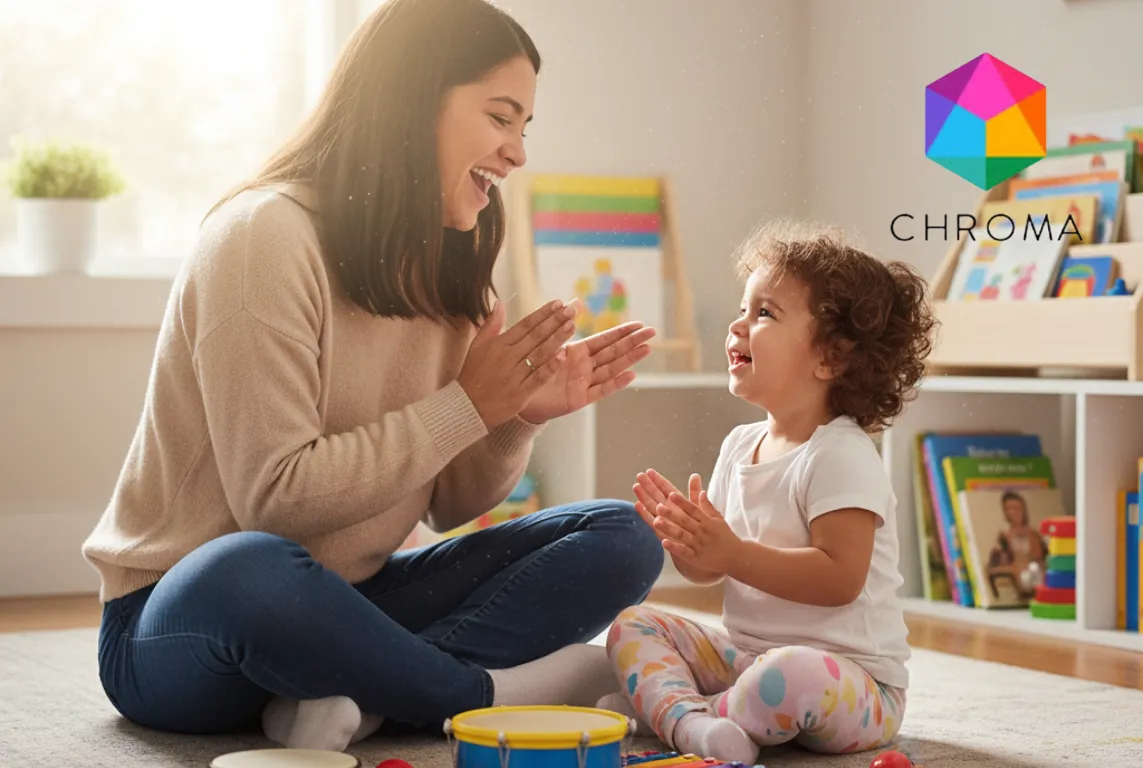
When parents sing, make eye contact, and share rhythm, children experience deep emotional attunement. This back-and-forth rhythm mirrors early communication patterns like cooing and babbling — a kind of “musical conversation.”
These exchanges build empathy and emotional intelligence, teaching your child to listen, respond, and connect.
You can pair this with creative play and color-based learning to make music even more meaningful. Try combining songs with art or movement — ideas you’ll find in Bringing Words to Life Through Play & Color.
How to Bring Music Into Everyday Life
You don’t need instruments or lessons — just consistency and joy.
Sing simple songs during routines (morning greetings, bath time, bedtime).
Encourage clapping, stomping, or shaking a rattle to the beat.
Create “music moments” — dance in the kitchen or hum while cooking together.
Explore different genres — from lullabies to gentle classical pieces — to expose your child to varied rhythms and moods.
Each musical moment helps develop rhythm, coordination, and emotion recognition — essential tools for lifelong learning.
The Takeaway
Music is more than background noise — it’s a developmental powerhouse. It strengthens the brain, nurtures emotional growth, and turns everyday interactions into learning experiences filled with joy and connection.
So sing, sway, and laugh your way through the day. You’re not just making memories — you’re making a little musician, thinker, and feeler.
