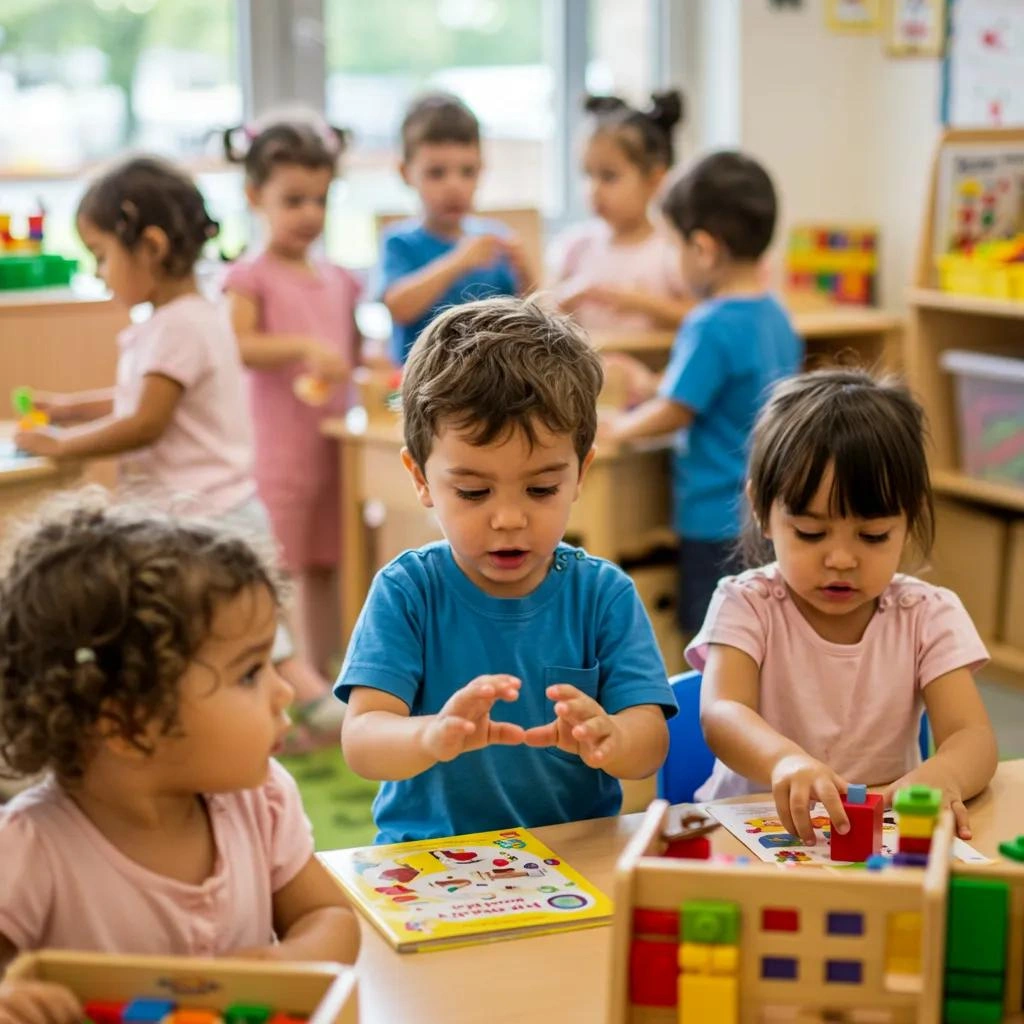
Early childhood education (ECE) is the structured provision of learning, care, and supportive interactions for children in the earliest years, and it shapes critical periods of brain growth that determine later learning capacity and social competence. This article explains why early childhood education matters for development, how specific program features produce measurable outcomes, and what parents in Georgia should look for when choosing a program. To ground practical guidance, Chroma Early Learning Academy is introduced as a trusted local provider offering Infant Care, Toddler Care, and Preschool programs that illustrate how age-appropriate curricula translate into developmental gains. Many families face questions about school readiness, separation, and how to compare programs; this piece addresses those concerns with evidence-based mechanisms, actionable checklists, and enrollment steps. You will learn the science behind early learning, the top benefits across cognitive, social-emotional, language, and physical domains, how program design maps to developmental milestones, how to evaluate providers in Georgia, and step-by-step enrollment guidance for Chroma Early Learning Academy’s programs.
What Is Early Childhood Education and Why Is It Important for Development?
Early childhood education is the combination of intentional learning experiences, responsive caregiving, and structured routines designed for children from infancy through the preschool years; it works by providing consistent stimulation and social interaction during sensitive neurodevelopmental windows. The mechanism that makes ECE effective is experience-dependent synaptic growth: repeated, meaningful interactions scaffold neural circuits for language, executive function, and emotional regulation, producing measurable gains in readiness and learning. High-quality programs produce benefits that include improved vocabulary, better self-regulation, and earlier mastery of foundational concepts, and those benefits reduce the need for later remediation. Understanding these biological and behavioral mechanisms helps parents evaluate program quality and prioritize settings that emphasize responsive caregiving and rich learning environments.
How Does Early Childhood Education Support Brain Growth in Young Children?
Early childhood education supports brain growth by providing repeated, emotionally attuned interactions and varied sensory experiences that strengthen synaptic connections and organize neural architecture for future learning. Neural mechanisms such as synaptogenesis, pruning, and myelination are guided by experience; predictable routines and language-rich activities promote durable pathways for memory, attention, and language acquisition. For example, daily read-alouds, scaffolded problem-solving, and responsive back-and-forth conversation stimulate circuits for vocabulary and executive function, while safe, play-based exploration encourages motor and sensory integration. Recent studies and developmental frameworks indicate that early interventions focused on responsive caregiving yield stronger outcomes than later remediation, which highlights why early access matters. These neurodevelopmental effects point directly to what parents should look for in a program, namely consistent caregiver responsiveness and structured, varied learning opportunities.
What Are the Main Goals of Early Childhood Education?
The primary goals of early childhood education are to build foundational skills for academic learning, foster social-emotional competence, expand language and communication, and support healthy physical development through play and routines. Programs aim to promote curiosity and problem-solving, teach emotion recognition and regulation, build early literacy and numeracy concepts, and develop motor skills through guided and free play. Each goal is pursued through targeted daily activities—such as small-group conversations for language growth and structured transitions for self-regulation—so the classroom design matters as much as individual lessons. When parents evaluate programs, they should look for explicit learning goals, assessment practices that monitor progress, and routines that balance exploration with predictable structure.
Which Developmental Areas Does Early Childhood Education Foster?
Early childhood education fosters four interconnected developmental domains—cognitive, social-emotional, language and literacy, and physical development—through specific activities and teacher strategies that create cumulative learning benefits. Cognitive development is supported with problem-solving tasks and early math concepts; social-emotional development is built through routines, modeling, and peer interaction; language and literacy are advanced with read-alouds and vocabulary-rich conversations; and physical development is fostered by gross and fine motor activities during play. Classroom examples include block-based STEM challenges for cognition, emotion coaching during conflicts for SEL, dialogic reading for vocabulary, and manipulative play for fine-motor precision. Mapping activities to domains clarifies how daily practice produces growth and helps parents identify programs that offer balanced, domain-specific learning.
Early Childhood Education: Key Benefits for Child Development
High-quality early childhood education delivers a constellation of benefits by combining enriched experiences, social contexts, and caregiver responsiveness to accelerate developmental trajectories across multiple domains. The mechanism behind these benefits is consistent, structured exposure to problem-solving, language, and social practice that reinforces neural pathways and behavioral routines. Below is a concise, prioritized list of the top benefits to highlight the key outcomes parents can expect from quality ECE.
- Cognitive and academic advantages: Early problem-solving, pattern recognition, and pre-math activities strengthen executive function and early numeracy skills, improving later school performance.
- Social-emotional development: Group settings teach emotion regulation, perspective-taking, and cooperative skills that reduce behavioral challenges and improve classroom adjustment.
- Language and literacy foundations: Frequent conversations, vocabulary instruction, and shared reading accelerate vocabulary growth and phonological awareness essential for reading.
- Physical development through play: Guided and free play promote gross and fine motor skills, coordination, and healthy activity habits that support overall development.
- Kindergarten readiness and long-term success: Combined gains in behavior, language, and early academics translate into smoother transitions to formal schooling and better longitudinal outcomes.
These benefits are produced by intentional curriculum design and consistent adult-child interactions, which is why program quality—measured by interactions, curriculum, and assessment—matters more than simply attendance. Understanding these linked mechanisms helps parents prioritize programs that explicitly target these outcomes.
Different benefits arise from different program features, and the table below maps benefits to mechanisms and typical program contexts to clarify where parents will see each advantage.
Different benefits of early childhood education emerge through distinct mechanisms and program activities.
| Benefit | Mechanism | Typical Age/Program |
|---|---|---|
| Cognitive and academic advantages | Guided play and structured learning tasks reinforce executive function | Preschool, GA Pre-K Lottery |
| Social-emotional development | Peer interaction and teacher coaching build regulation and social skills | Toddler Care, Preschool |
| Language and literacy foundations | Read-alouds and vocabulary-rich talk increase phonological awareness | Infant Care, Preschool |
| Physical development | Play-based motor activities develop gross/fine motor control | Toddler Care, After School |
How Does Early Childhood Education Boost Cognitive Development?

Early childhood education boosts cognitive development by offering scaffolded experiences that challenge reasoning, memory, and classification skills while providing adult support to extend learning. Activities like sorting, counting, and simple experiments promote hypothesis testing and symbolic thought, while teacher scaffolding and repetition consolidate those emerging skills into reliable competencies. Executive functions such as working memory, inhibitory control, and cognitive flexibility are strengthened through routines and games that require turn-taking and rule-following. When programs systematically embed cognitive challenges in playful contexts, children practice higher-order skills that underpin later academic achievement, which makes cognitive-focused curriculum elements a high-priority selection criterion for parents.
In What Ways Does Early Learning Enhance Social-Emotional Development?

Early learning enhances social-emotional development by creating daily opportunities for children to practice emotion regulation, social problem-solving, and relationship building with peers and caregivers in a monitored setting. Teachers model conflict resolution, set predictable routines that reduce anxiety, and guide children through co-regulation during challenging moments, which gradually builds self-regulation. Group activities teach sharing, perspective-taking, and collaborative play, while routines scaffold expectations and strengthen secure attachment with consistent caregivers. These social-emotional foundations lead to fewer behavior problems and improved peer relationships in school, so parents should prioritize settings that demonstrate explicit SEL strategies.
Social-Emotional Learning in Early Childhood Development Emotional literacy is as vital as any other type of learning and is central to children’s ability to interact and form relationships with others—their social competence. Broadly stated, aspects of emotional competence developing through the lifespan include emotional expression and experience, understanding emotions of self and others, and the regulation of emotion. Children become increasingly emotionally competent over time. Growing evidence suggests that such emotional competence contributes not only to children’s social competence and well-being during the early childhood years, but also to later outcomes, such as school adjustment and mental health (Denham, 1998;Saarni, 1999). In this entry, the importance of both emotional and social competence (subsumed as social emotional learning, or SEL), along with related risk and resilience factors and programming to promote SEL during early childhood, are outlined. Social and emotional learning, early childhood, SA Denham, 2003
The development of emotional literacy and social competence is crucial for children’s ability to form relationships and navigate social situations effectively.
How Does Early Education Build Strong Language and Literacy Foundations?
Early education builds language and literacy foundations through frequent, intentional language exposure—narrative play, dialogic reading, and targeted vocabulary instruction—that increases receptive and expressive language and builds phonological awareness. Teachers who use rich, descriptive language during routines and reading times provide the repeated language models children need to internalize vocabulary and sentence structures. Activities such as rhymes, songs, and storytelling support phonemic awareness and emergent literacy, while small-group talk fosters expressive language and conversational skills. Aligning program practices with language goals is critical for preschool readiness, so parents should seek curricula that emphasize daily, structured language interactions.
Why Is Play-Based Learning Essential for Creativity and Physical Growth?
Play-based learning is essential because it integrates cognitive challenges, social negotiation, imaginative exploration, and motor practice into developmentally appropriate experiences that children find intrinsically motivating. Free play encourages divergent thinking and creativity, while guided play targets specific skills such as building early numeracy through structured play tasks. Play supports physical development by offering repeated opportunities for gross motor challenges (running, climbing) and fine motor refinement (manipulatives, drawing), and it serves as the vehicle for social learning and language practice. Because play is the natural mode of learning for young children, programs that protect daily play time produce broader developmental gains across domains.
How Does Early Childhood Education Prepare Children for Kindergarten and Future Success?
Early childhood education prepares children for kindergarten by aligning daily routines, self-help skills, social expectations, and foundational academic concepts with what schools expect upon entry, thereby reducing transition stress and accelerating early achievement. Readiness skills include following multi-step instructions, basic number and letter recognition, self-regulation during group activities, and the ability to communicate needs and emotions effectively. Programs that practice transitions, use school-like schedules, and involve families in preparation help children adapt quickly to classroom norms. Longitudinal research shows that children with strong early learning experiences often require less remedial instruction and demonstrate better academic trajectories, underscoring the long-term payoff of early investment.
How Does Chroma Early Learning Academy’s Approach Enhance Early Childhood Development?
Chroma Early Learning Academy provides a local example of how program design can intentionally map to developmental outcomes by offering age-specific programs and a curriculum that combines nurturing care with early learning goals. The mechanism Chroma uses is an integrated care-and-learning model where responsive caregiving, structured learning blocks, and play-based activities work together to reinforce language, social-emotional skills, and early academics. Chroma Early Learning Academy operates multiple locations across Georgia and lists Infant Care, Toddler Care, Preschool, GA Pre-K Lottery, After School, and Kindergarten Readiness among its core offerings, which enables families to follow consistent developmental pathways from infancy through school entry. The following table summarizes programs, age focus, and core developmental outcomes to make it clear which program emphasizes which domains.
| Program | Age Range | Core Developmental Outcomes |
|---|---|---|
| Infant Care | Infancy (early months) | Responsive caregiving, basic language exposure, sleep/nutrition routines |
| Toddler Care | 12–36 months | Social interaction, early motor skills, vocabulary expansion |
| Preschool | 3–5 years | Early literacy, numeracy concepts, SEL and school routines |
| GA Pre-K Lottery | Pre-K age | Structured readiness curriculum and community access |
| After School | School-age | Homework support, social skills, enrichment activities |
| Kindergarten Readiness | Pre-K to K transition | Self-regulation, academic skills, transition practices |
What Age-Specific Programs Does Chroma Early Learning Academy Offer to Support Development?
Chroma Early Learning Academy’s program lineup includes Infant Care, Toddler Care, Preschool, GA Pre-K Lottery participation, After School, and Kindergarten Readiness, each designed to address age-specific developmental priorities. Infant Care focuses on responsive caregiving and early language exposure; Toddler Care emphasizes social interaction, motor development, and expanding vocabulary through play; Preschool targets early literacy, numeracy concepts, and social-emotional routines that prepare children for formal schooling. GA Pre-K Lottery participation provides an avenue for eligible families to access structured pre-kindergarten services, and After School programs extend learning and socialization for older children. This progression enables continuity where children encounter progressively complex learning goals aligned to developmental milestones.
How Does Chroma Early Learning Academy’s Curriculum Foster Key Developmental Skills?
Chroma Early Learning Academy’s curriculum combines play-based learning blocks, language-rich interactions, and SEL routines to cultivate cognitive, language, and social-emotional skills throughout the day. Daily schedules commonly integrate small-group literacy time, guided exploration for early science and math concepts, and teacher-led social problem-solving moments that practice regulation and cooperation. Assessment and progress monitoring are used to individualize learning goals and communicate growth to parents, while routines such as morning circles and transition cues reinforce executive function. By blending nurturing care with explicit learning objectives, the curriculum fosters both the relational security and the practice opportunities children need to develop core skills.
What Makes Chroma Early Learning Academy’s Care and Learning Model Unique?
Chroma Early Learning Academy frames its unique value proposition as “Where Early Learning Meets Exceptional Care,” emphasizing a dual focus on nurturing environments and proven instructional approaches that support measurable development. The model prioritizes individualized attention within classroom routines, structured learning sequences embedded in play, and consistent communication with families to reinforce learning at home. These combined approaches create a nurturing, structured setting that supports both emotional security and targeted skill building, making it easier for children to engage in learning and for parents to track progress. Local accessibility across multiple Georgia locations enhances continuity of care for families seeking consistent program pathways.
What Do Parents Say About Their Children’s Progress at Chroma Early Learning Academy?
Parents commonly report that their children show progress in language, social skills, and readiness behaviors after participating in Chroma Early Learning Academy programs, emphasizing caregiver warmth and observed learning milestones as evidence of development. Themes in parent feedback include appreciation for attentive staff, visible growth in communication and self-help skills, and smoother transitions to kindergarten—observations that align with the program’s stated goals for early learning. These parental perspectives reinforce program claims by linking daily practices to concrete child outcomes in language and behavior. Such reported outcomes provide families with pragmatic signals about program effectiveness when comparing local options.
How Can Parents Choose the Right Early Childhood Education Program in Georgia?
Choosing the right program requires a prioritized checklist that balances safety, curriculum quality, staff qualifications, and logistical fit, because program features directly influence the developmental benefits children receive. The mechanism of selection is evidence-based evaluation: parents assess observable practices—responsive teacher-child interactions, language-rich environments, and play-based learning—and verify documentation and communication practices during visits. Georgia-specific considerations include awareness of programs like GA Pre-K and multi-location availability to support commuting and family schedules. Below is a practical checklist parents can use during tours and evaluations.
- Safety and health practices: Observe supervision ratios, cleanliness, and documented safety protocols.
- Curriculum and daily routine: Ask for sample schedules and examples of classroom activities that target language and SEL.
- Staff qualifications and interactions: Look for warm, responsive interactions and ask about caregiver training and assessment practices.
- Communication with families: Request examples of progress reports and parent-teacher engagement routines.
- Location and logistics: Consider drop-off logistics, proximity to work, and availability of consistent placement across age groups.
This checklist gives parents targeted questions and observation points that map directly to developmental outcomes and program quality indicators.
The table below connects selection criteria to what to look for and how Chroma Early Learning Academy addresses each criterion to make comparisons concrete for Georgia parents.
| Selection Criterion | What to Look For | How Chroma Addresses It |
|---|---|---|
| Safety and supervision | Low-risk environment and clear protocols | Emphasizes nurturing care and structured routines |
| Curriculum quality | Play-based, language-rich, structured learning blocks | Uses play-based learning and preschool curricula |
| Staff qualifications | Trained educators and responsive interactions | Focus on caregiver-child relationships and progress monitoring |
| Family communication | Regular updates and opportunities for engagement | Provides parent communication and resources |
| Location/accessibility | Convenient hours and multiple locations | Operates across multiple Georgia communities |
What Criteria Should Parents Use to Evaluate Early Learning Providers?
Parents should prioritize five core criteria—safety, curriculum quality, teacher-child interactions, family communication, and continuity of care—because these elements are the strongest predictors of developmental gains. During tours, parents should observe teacher responsiveness, the balance between free and guided play, evidence of language-rich interactions, and how teachers support emotional regulation during conflicts. Request documentation such as sample lesson plans, assessment or observation notes, and examples of parent communication to validate claims. Asking targeted questions about daily schedules, group sizes, and how transitions are handled will reveal whether a program’s practices align with the child’s developmental needs.
Why Is Location and Accessibility Important for Early Childhood Education?
Location and accessibility matter because daily commute time, drop-off logistics, and the ability to maintain stable enrollment affect family routine consistency, which in turn influences a child’s sense of security and program retention. Short commutes reduce stress around transitions, increase punctuality for routines that reinforce learning, and make attendance more reliable—factors that compound into greater developmental benefit. Multi-location providers that allow continuity across stages can reduce disruption when families move or change schedules, supporting a smoother developmental trajectory. Parents should weigh accessibility alongside quality indicators to ensure both developmental and practical needs are met.
How Does Chroma Early Learning Academy Meet Parental Expectations and Concerns?
Chroma Early Learning Academy addresses common parental concerns—such as separation anxiety, communication, and program fit—by emphasizing nurturing caregiving practices, routine communication with families, and structured transitions to support children’s emotional adjustment. Problem-solution approaches in the classroom include gradual separation strategies, social stories for transitions, and consistent routines that help children know what to expect. Communication channels for sharing progress and resources help families reinforce learning at home, while program continuity across early years supports stable developmental pathways. These measures reduce common pain points parents report during the early enrollment phase and improve overall program satisfaction.
What Are the Long-Term Impacts of Quality Early Childhood Education?
Quality early childhood education produces long-term impacts that extend from improved academic trajectories to societal returns on investment, because early formative experiences shape skills that persist into adulthood. The mechanism linking early intervention to long-term benefits is durable skills formation: language, self-regulation, and foundational academics build upon one another and reduce later needs for remedial services. Research synthesis indicates correlations between early quality ECE and higher rates of high school completion, better employment outcomes, and lower societal costs related to special education and remediation. These long-term effects provide a compelling rationale for families and policymakers to prioritize access to high-quality early learning.
How Does Early Learning Influence Academic Achievement and Lifelong Skills?
Early learning influences academic achievement by accelerating early literacy and numeracy acquisition and by strengthening executive function—skills that predict later school success and learning persistence. Children who receive structured early education demonstrate earlier reading readiness and better math reasoning in elementary grades, which compounds into improved standardized outcomes. Additionally, lifelong skills such as self-regulation, attention control, and cooperative behavior are scaffolded in early classrooms through routines and social practice, enabling children to navigate academic and social demands more effectively. These compounded effects explain why early investments often yield sustained educational benefits.
What Role Does Early Childhood Education Play in Social and Emotional Well-Being?
Early childhood education plays a central role in social and emotional well-being by providing daily practice in emotion regulation, social problem-solving, and relationship-building within a safe, guided environment. SEL foundations formed in early classrooms support mental health, reduce conduct problems, and improve peer relationships, creating a positive context for learning and later social functioning. Teachers who intentionally coach emotions and model conflict resolution equip children with coping strategies that reduce stress and improve adaptability. Over time, these social-emotional competencies contribute to resilience and more successful interpersonal outcomes.
What Economic and Societal Benefits Result from Investing in Early Education?
Investing in early education yields economic and societal benefits through improved workforce readiness, reduced remediation and special education costs, and higher long-term productivity among cohorts that experienced quality early learning. Cost-benefit analyses consistently show positive returns—through reduced public spending on remediation and increased lifetime earnings for program participants—making early education a strategic public investment. Policy implications include prioritizing funding mechanisms that expand access and quality, supporting teacher training, and integrating programs like GA Pre-K to reach eligible families. These systemic benefits underscore the broader value of early childhood education beyond individual outcomes.
What Are Common Questions Parents Have About Early Childhood Education?
Parents commonly ask direct, practical questions about why early childhood education matters, what core benefits they should expect, and how to support learning at home; short, evidence-based answers help clarify priorities and next steps. The mechanism of answering these questions succinctly supports quick decision-making and reduces anxiety during enrollment. Below are concise responses to frequently asked parental questions designed for quick reference and snippet-style clarity.
Why Is Early Childhood Education Critical for a Child’s Development?
Early childhood education is critical because it harnesses sensitive developmental windows when neural circuits are most receptive to experience, enabling accelerated growth in language, self-regulation, and cognitive foundations that persist into school years. The combination of responsive adults, enriched learning environments, and consistent routines builds the scaffolding for later complex skills. Early access reduces the likelihood of later academic remediation and supports social competence, which together shape lifetime learning trajectories.
What Are the Five Key Benefits of Early Childhood Education?
Below is a compact list of the five key benefits parents should expect from quality ECE, each with a brief explanation for quick guidance.
- Cognitive Gains: Structured learning activities accelerate problem-solving and early numeracy.
- Language Growth: Dialogic reading and rich conversations expand vocabulary and expressive skills.
- Social-Emotional Skills: Group routines and adult coaching develop emotion regulation and cooperation.
- Physical Development: Play-based activities improve gross and fine motor coordination.
- School Readiness: Integrated routines and early academics ease transitions to kindergarten.
These concise benefits provide a quick checklist for parents assessing program claims.
How Does Early Childhood Education Affect Future Success?
Early childhood education affects future success by establishing foundational cognitive and social skills that predict academic persistence and workforce-readiness; children with quality early experiences tend to achieve higher educational attainment and show better social adjustment over time. The mechanisms include improved executive function, early literacy competence, and social skills that reduce behavior-driven barriers to learning. These upstream effects translate into downstream advantages in education, employment, and social outcomes.
What Are the Four Main Areas of Child Development?
The four main areas of child development are cognitive, social-emotional, language and literacy, and physical development, and each area has observable indicators that parents can monitor. Cognitive development includes problem-solving and early math; social-emotional covers emotion regulation and peer interactions; language and literacy involve vocabulary growth and phonological awareness; physical development encompasses gross and fine motor skill progression. Understanding these domains helps parents link program activities to specific developmental milestones.
How Can Parents Support Their Child’s Learning at Home?
Parents can support learning through daily routines that reinforce classroom goals—read aloud each day, engage in simple counting and sorting games, practice transitions and routines, and provide open-ended play opportunities that encourage problem-solving and language. Intentionally increasing conversational turns, narrating activities, and modeling emotion language help language and social-emotional growth. Below is a short, actionable list of home activities parents can use immediately.
Parent-friendly activities to support learning at home:
- Daily Read-Alouds: Spend 10–15 minutes reading and asking open-ended questions.
- Narrative Talk: Describe daily routines and encourage your child to retell events.
- Play-Based Counting: Use snack time or toys to practice counting and sorting.
- Routine Practice: Rehearse morning and bedtime routines to build executive function.
- Outdoor Play: Provide opportunities for gross motor development and social play.
These simple activities align with classroom practices and amplify the developmental returns of early learning programs.
How Does Early Childhood Education in Georgia Compare to National Trends?
Georgia’s early childhood landscape reflects both national trends and state-specific programs that expand access, making it important for parents to understand local participation patterns and funding mechanisms when evaluating options. The mechanism of state-level support—through programs such as GA Pre-K—shapes local access to pre-kindergarten services and interacts with national trends emphasizing SEL, inclusion, and technology-enabled personalization. Reviewing participation statistics, program descriptions, and emerging trends helps parents place local options in context.
What Are the Latest Statistics on Preschool Participation in Georgia?
Preschool participation in Georgia includes both public and private program attendance, with notable enrollment in state-supported pre-kindergarten options where available; participation rates vary by community and eligibility. Current data trends show increased emphasis on expanding access and aligning pre-K services with school readiness goals, and parents should interpret participation metrics in light of local availability and program quality. Understanding local participation helps families anticipate competition for seats in high-demand programs and plan enrollment accordingly.
How Is Georgia Supporting Early Learning Through Funding and Programs?
Georgia supports early learning through state programs and funding structures that include pre-kindergarten initiatives and community-based resources designed to increase access to structured early education, particularly for eligible families. Mechanisms include lotteries or enrollment processes for state-supported seats and partnerships with local providers to broaden capacity. Parents should investigate eligibility criteria for state programs such as GA Pre-K and explore local provider participation to identify available options within their community.
What Trends Are Shaping Early Childhood Education in 2025?
Key trends shaping early childhood education in 2025 include increased emphasis on social-emotional learning, personalized and inclusive instruction, technology integration for assessment and family engagement, and sustained attention to play-based curricula. These trends reflect a broader shift toward holistic readiness that balances cognitive, social, and physical development while leveraging tools for individualized progress monitoring. For parents, trend awareness helps in selecting programs that not only meet today’s standards but also adapt to evolving best practices in early learning.
How Can Parents Enroll Their Child in Chroma Early Learning Academy’s Early Learning Programs?
Enrolling in a program typically follows an inquiry, tour, application, and registration sequence, and Chroma Early Learning Academy’s enrollment pathways include steps that align with common parental expectations for support and clarity. The mechanism for smooth enrollment is a transparent, stepwise process supported by clear communication about documentation, program fit, and timelines. Below is a practical set of enrollment steps parents can follow to apply for program placement or GA Pre-K Lottery consideration.
Enrollment steps parents should expect when applying to a provider like Chroma Early Learning Academy:
- Inquiry and Information Request: Contact the center to request program details and confirm age-appropriate options.
- Schedule a Tour: Visit the facility to observe daily routines, teacher-child interactions, and classroom environments.
- Submit Application Materials: Complete required application forms and provide any documentation requested by the center.
- Placement and Registration: Confirm enrollment, attend orientation, and review transition plans with staff.
- Prepare for Start: Follow center guidance for transition visits, supply lists, and routines to ease entry.
What Is the Enrollment Process at Chroma Early Learning Academy?
The enrollment process at Chroma Early Learning Academy follows standard stages—initial inquiry, tour, application, and registration—and emphasizes family communication and transition support to ensure fit and readiness. Parents typically begin by requesting program information for Infant Care, Toddler Care, Preschool, or GA Pre-K Lottery opportunities, then schedule a visit to observe classrooms and staff interactions. Application submission secures placement consideration, and registration confirms schedules and start dates with orientation materials provided to support transitions. Clear communication at each stage helps parents prepare documentation and understand next steps for their child’s successful start.
How Can Parents Prepare Their Child for a Smooth Transition to Early Learning?
Parents can prepare children for smooth transitions by establishing consistent routines at home, practicing short separation periods, and introducing social stories that describe daily schedules to reduce anxiety. Activities like brief trial visits, playdates, and rehearsal of arrival and departure routines help children build familiarity with new settings. Preparing a simple, predictable morning routine and practicing self-help tasks—such as putting on a coat or opening a snack—boosts independence and lowers stress on the first days. These preparations complement center transition plans and make the initial weeks more productive for learning and attachment.
What Support Services Does Chroma Early Learning Academy Offer Families?
Chroma Early Learning Academy offers family-support elements that include routine communication about child progress, resources for transition support, and guidance to help parents reinforce learning at home, creating a partnership between caregivers and educators. Communication channels typically include progress updates, family engagement resources, and staff availability for questions about developmental milestones. Where applicable, centers may provide referrals or information about community supports to address specific family needs. These services strengthen the home-school connection and improve developmental consistency across environments.