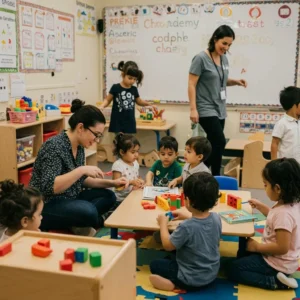
Meet Our Dedicated Early Learning Academy Team: Expert Educators Shaping Atlanta’s Future
Chroma Early Learning Academy’s educators form a committed team of early childhood professionals who deliver nurturing care and developmentally rich learning for children across Metro Atlanta. This article explains who these certified early childhood educators are, how they put the PrismPath™ curriculum into practice, and what parents can expect from specialized teams across infant, toddler, preschool, Pre-K and school-age programs. Parents will learn about common teacher credentials in Georgia, the daily classroom practices that demonstrate expertise, and the training and compliance structures that keep quality consistent. After an overview of staff categories and philosophy, the article maps how PrismPath™ is translated into routines, lists specialized team roles with a clear table, and outlines professional development and trust signals so families can confidently consider scheduling a visit to meet campus teams.
Who Are the Certified Early Learning Educators at Chroma in Atlanta?
Certified early learning educators at Chroma are professionals trained in early childhood education who combine state certifications with hands-on classroom experience to support children from 6 weeks to 12 years. These educators implement evidence-based practices that promote social, emotional, cognitive, and motor development while maintaining safety and family communication. State-certified in Georgia means staff meet credential tiers and background checks required for licensed childcare providers, and Chroma emphasizes verification and ongoing documentation of those credentials. The next subsections break down typical preschool qualifications and illustrate everyday educator practices that demonstrate expertise and dedication.
What Qualifications Do Our Preschool Teachers Hold in Georgia?
Preschool teachers at Chroma typically hold recognized early childhood credentials such as Child Development Associate (CDA) certificates or associate/bachelor’s degrees in Early Childhood Education or related fields, consistent with Georgia expectations. These credentials reflect coursework in child development, lesson planning, assessment, and classroom management, which teachers use to design age-appropriate learning experiences. Educators also maintain basic health and safety certifications like CPR and First Aid and participate in state-mandated background checks and fingerprinting for trust and compliance. Understanding these qualifications helps parents know which credentials support kindergarten readiness and individualized learning.
This mapping clarifies how role-specific credentials translate into competencies that promote learning and readiness.
How Do Our Childcare Educators Demonstrate Expertise and Dedication?
Chroma educators demonstrate expertise through planned observation, individualized learning goals, and consistent family communication that reinforces development beyond the classroom. In practice, teachers use formative observation to tailor activities, scaffold language development, and guide social problem-solving while logging progress to share with families. Dedication appears in routines that prioritize attachment and predictable schedules—strategies that create security and accelerate learning—while educators engage in reflective practice to refine instruction. These classroom behaviors connect directly to the PrismPath™ pillars discussed next, showing how philosophy becomes daily practice.
How Does Chroma’s PrismPath™ Curriculum Reflect Our Teaching Philosophy?
PrismPath™ is Chroma’s proprietary early learning framework that organizes learning around core developmental pillars—physical, emotional, social, academic, and creative—so teachers can plan holistic, play-based experiences for young children. The curriculum functions as a practical guide: educators map observations to pillar-based goals, design scaffolding activities, and use assessment data to adjust instruction. By translating philosophy into lesson plans, PrismPath™ ensures every teacher targets measurable skills while honoring child-led discovery and family partnership. The following subsections list core principles and show concrete classroom implementations that teachers use across age groups.
PrismPath™ emphasizes several core principles that guide daily teaching and goal-setting for children across programs. These principles provide a reliable foundation for teachers to plan activities that nurture multiple domains of development simultaneously. The next section details those principles in list form and explains how each supports child outcomes.
- Child-centered learning: Teachers follow children’s interests to deepen engagement and meaningful learning.
- Holistic development: Activities intentionally target cognitive, social, emotional, physical, and creative growth.
- Play as primary learning vehicle: Structured and unstructured play drives skill-building and problem-solving.
- Family partnership: Ongoing communication and shared goals link classroom learning to home routines.
These principles create coherent classroom experiences where play, assessment, and family collaboration produce progress toward kindergarten readiness and social-emotional competence.
What Are the Core Principles of Our Early Childhood Education Philosophy?
The PrismPath™ philosophy centers on child-centered, developmentally appropriate practice that integrates play with intentional teaching to foster holistic growth. Teachers design experiences that intentionally teach language, motor skills, and emergent literacy while honoring each child’s unique pace; this dual focus balances guided instruction with exploration. Emphasizing family partnership, the philosophy encourages shared observations and goal-setting so caregivers and educators reinforce learning consistently. These principles feed directly into classroom routines and assessments, which the next subsection describes in practical terms.
How Do Educators Implement Play-Based and Holistic Learning Approaches?
Educators implement play-based learning through intentional setups, guided inquiry, and small-group projects that embed targeted skills within meaningful contexts. For infants and toddlers, teachers create sensory-rich learning stations that promote motor and language milestones; for preschool and Pre-K, activities include thematic investigations, dramatic play, and scaffolded literacy practices. Teachers assess using observation and documented learning goals, linking play interactions to measurable progress such as vocabulary growth or self-regulation. This practical implementation ensures play supports explicit readiness skills while preserving child agency and curiosity.
Which Specialized Teams Make Up Our Early Learning Academy Staff?
Chroma’s staff is organized into specialized teams that focus on age-specific needs: infant, toddler, preschool, Pre-K, and school-age programs, each with lead teachers and supportive assistants who collaborate under campus leadership. Specialization allows educators to concentrate training and routines on developmental milestones appropriate to their cohort, ensuring optimal ratios, individualized care, and program-specific enrichment. Leadership roles provide coaching, curriculum oversight, and family communication so classroom practice aligns with PrismPath™ goals. The following table compares teams by age range, role, and key qualifications to help families understand who will work with their child.
This comparison shows how teams align qualifications with program duties, enabling parents to see the correspondence between staff expertise and child needs.
Who Leads Our Infant and Toddler Care Educators?
Infant and toddler teams are led by experienced lead teachers and campus-level leaders who specialize in attachment, feeding, and safe-sleep guidance to ensure consistent care. Leadership emphasizes continuity of care through routine-setting, individualized care plans, and daily family communication, which supports secure attachments and developmental progress. Leads complete specialized infant/toddler training and coach assistants on observation-based interactions and responsive caregiving. This leadership framework guarantees families that specialized expertise guides the youngest children’s developmental milestones and transitions.
What Roles Do Preschool, Pre-K, and School-Age Teachers Play?
Preschool and Pre-K teachers deliver curriculum-aligned lessons that focus on language development, emergent literacy, numeracy concepts, and social-emotional skills that underlie kindergarten readiness. Lead Pre-K teachers bring GA Pre-K-oriented practices into the classroom, assessing readiness markers and coordinating transitions to elementary school. School-age staff provide enrichment, homework support, and seasonal camp programming that extend learning beyond core academics while fostering independence and peer collaboration. Across these roles, teachers balance guided instruction with individualized support to meet each child’s growth trajectory and daily needs.
How Does Chroma Ensure Continuous Professional Development and Staff Excellence?
Chroma ensures staff excellence through a structured cycle of hiring standards, ongoing professional development (PD), and compliance with Georgia DECAL requirements that together maintain high-quality instruction and safety. Hiring includes credential verification and background screenings, while PD offers regular coaching, curriculum training, and targeted workshops to deepen teacher practice. The organization documents training outcomes and credential maintenance to stay aligned with state expectations and to support career progression for educators. The following table outlines typical training types, frequency, and the outcomes or credentials they produce so families can see how investment in staff development benefits children.
Professional development at Chroma covers a range of topics that support instructional quality, health and safety, and classroom leadership. The next table lays out training categories, how often they occur, and the observable outcomes they produce for classroom practice.
This table demonstrates how training types map to classroom outcomes, reinforcing consistent improvement that benefits children’s learning.
What Ongoing Training and Certifications Do Our Educators Pursue?
Educators engage in a blend of mandatory and elective training that includes health and safety certifications, curriculum coaching, and developmentally focused workshops to strengthen instruction and responsiveness. Required trainings such as CPR and First Aid are renewed regularly to ensure readiness for health events, while curriculum coaching sessions deepen fidelity to PrismPath™ and assessment practices. Teachers also pursue credential upgrades—CDA attainment or ECE degree coursework—supported by mentorship and evaluation cycles that foster reflective practice. Together, these activities create a professional learning culture that directly enhances classroom quality and child outcomes.
How Do We Comply with Georgia DECAL Standards for Staff Qualifications?
Compliance with Georgia DECAL is maintained through systematic credential verification, staff recordkeeping, and alignment of role expectations with state-tier requirements for early childhood professionals. Chroma maps common staff roles against DECAL credential tiers and documents required coursework, background checks, and ongoing training in personnel files to ensure transparency and readiness for audits. Regular internal audits and leadership reviews ensure staff credentials remain current and that professional development addresses any gaps identified through observation or regulation updates. This compliance process reassures families that staff qualifications and program practices meet state expectations for safety and educational quality.
Why Do Parents Trust and Recommend Our Dedicated Early Learning Teachers?
Parents trust Chroma’s teachers because of clear trust signals: state-certified staff, systematic professional development, structured safety practices, and consistent family communication that supports child progress. Evidence of trust also comes from observable outcomes—children making developmental gains, smooth transitions to kindergarten, and attentive supervision during routines and enrichment activities. For families seeking to meet staff in person, Chroma encourages scheduling a tour to meet local campus teams, view classrooms, and ask about staff qualifications and training pathways. The next subsections synthesize common parental themes found in feedback and outline how safety and readiness are actively fostered by staff.
Families often highlight consistent relationships, warm teacher-child interactions, and effective communication as primary reasons they recommend their child’s teachers; these themes reflect the staff behaviors that produce strong developmental outcomes. Summarizing common feedback without quoting individual testimonials protects privacy while showing patterns of satisfaction rooted in staff continuity and responsiveness. The following list captures the main trust signals parents commonly cite when evaluating early learning providers.
- State-certified and trained educators who follow verified practices.
- Regular, clear communication about progress and daily routines.
- Safe, predictable classroom environments with attentive caregiving.
- Measurable learning progress toward social, language, and readiness skills.
These trust signals form the basis for family confidence and often prompt parents to recommend Chroma to others seeking quality early education.
What Do Parent Testimonials Reveal About Our Staff’s Nurturing Environment?
Rather than citing individual quotes, common themes in parent feedback show appreciation for continuity of care, clear progress reporting, and teachers who build warm, consistent relationships with children. Parents emphasize that predictable routines and individualized attention help children feel secure and accelerate progress in language and social skills. Families also value transparent communication from teachers and leaders about milestones, behavior guidance, and next-step strategies for home reinforcement. These patterns of feedback link directly to teacher practices—attachment-focused caregiving, observation-based planning, and proactive family partnerships—that generate measurable developmental gains.
How Does Our Team Foster Safety and Kindergarten Readiness?
Chroma’s team fosters safety through trained staffing, enforced health protocols, and attentive supervision during transitions and activities, ensuring secure learning environments where children can explore. Readiness is built by aligning daily experiences to PrismPath™ pillars, with Pre-K programming targeting emergent literacy, numeracy, self-regulation, and social skills essential for kindergarten success. Teachers document progress through observations and share developmentally appropriate next steps with families so home and school collaborate on readiness goals. This coordinated approach—safety plus targeted readiness instruction—prepares children for confident transitions into elementary school.
- Visit to Meet Staff: Schedule a campus visit to meet lead teachers and observe classrooms.
- Ask About Credentials: Request information on staff qualifications and ongoing training.
- Review Child Progress: Discuss assessment routines and how teachers communicate milestones.
This final action-oriented list guides families toward practical next steps while reinforcing the transparency and professional standards that underpin Chroma’s approach.